
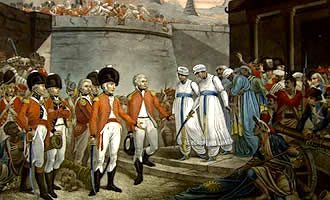

The British colonial rule in India began in the early 18th century. The East India Company established control over vast territories. The British government took direct control after the Revolt of 1857. The era marked changes in administration, economy, and society.
Promotion of Education
The British government promoted modern education after 1833. The establishment of universities in Calcutta, Bombay, and Madras in 1857 marked milestone. Initially, educated Indians were praised for their loyalty. However, as they began to critique British imperialism, attitudes shifted. The British became hostile towards educated Indians, viewing them as threats to their rule.
Nationalist Movements
Educated Indians founded the Indian National Congress in 1885. This marked the beginning of organised nationalist movements. British officials viewed this as a challenge to their authority. They implemented measures to restrict higher education, derogatorily labelling educated Indians as ‘babus.’
Relationship with Zamindars
The British cultivated alliances with zamindars and landlords. These groups were seen as conservative allies. The British returned lands to zamindars in regions like Avadh. Zamindars became defenders of British rule in exchange for their privileges. This strategy aimed to counterbalance nationalist sentiments.
Social Reform Policies
Initially, the British supported social reformers. However, after the Revolt of 1857, they aligned with conservative classes. They abandoned earlier reforms, fearing they contributed to unrest. This shift allowed harmful customs to persist. The British promoted communalism and casteism for political gain, exacerbating social divisions.
Press and Freedom of Expression
The British introduced the printing press, facilitating the growth of a modern press. Educated Indians recognised its potential for political influence. Key figures like Ram Mohan Roy and Lokmanya Tilak established influential newspapers. In 1835, restrictions on the press were lifted, initially encouraging support for British rule. However, as nationalists used the press for criticism, the British imposed restrictions. The Vernacular Press Act of 1878 severely limited Indian-language newspapers. Although repealed in 1882, further restrictions followed in the early 20th century.
Racial Antagonism
British rule was marked by a sense of racial superiority. The aftermath of the Revolt of 1857 intensified racial divisions. Segregation became common in public spaces. Indians faced discrimination in railway compartments, hotels, and clubs. This separation reinforced British dominance and alienated the Indian populace.
Neglect of Social Services
The British government prioritised military and administrative spending. In 1886, out of Rs. 47 crores in revenue, only Rs. 2 crores was allocated to education and health. Urban areas received limited improvements, while rural populations were largely neglected. This lack of investment hindered social development.
Labour Conditions
Workers in factories faced dire conditions. Long hours and low wages characterised their lives. Women and children worked alongside men, often in hazardous environments. The first Indian Factory Act in 1881 aimed to regulate child labour but was limited. Subsequent acts improved conditions slightly, but British-owned plantations remained exempt from regulations. The government prioritised capitalist interests over workers’ rights.
Impact of the Revolt of 1857
The Revolt of 1857 was a very important event. It prompted changes in British administration. Initial reactions in Britain included shock and calls for revenge. The East India Company was abolished, and direct rule was established under the Crown. The Government of India Act, 1858 formalised this transition.
Administrative Reforms
Post-revolt, the British implemented several administrative reforms. The role of the Governor-General was restructured into the Viceroy of India. The Secretary of State for India was established to oversee governance. The British army was reorganised to reduce reliance on Indian soldiers. Infrastructure improvements aimed to facilitate military movement rather than benefit Indian society.
Ideological Shifts
British policies shifted from reformist to conservative post-1857. The focus on Westernisation and social reform diminished. The British refrained from interfering in Indian customs, fearing backlash. The policy of divide and rule became prevalent, accentuating communal identities. This strategy aimed to weaken collective Indian nationalism.
Surveillance and Control
To prevent future rebellions, the British enhanced surveillance. Intelligence networks and a robust police system were established. Spies and informants became integral to governance. This focus on control reflected the British fear of uprisings.
Urbanisation and New Towns
Post-revolt, urban areas underwent changes. The British sought to create secure enclaves for Europeans. Civil Lines were established, segregating British residents from Indians. Cantonments were developed for military purposes. Sanitation and infrastructure improvements were implemented, primarily benefiting European settlements.
Economic Changes
By the 18th century, cities like Madras, Calcutta, and Bombay became important trade centres. The English East India Company built fortified settlements for protection. Indian merchants began establishing their own settlements. However, colonial policies restricted industrial growth. Only a few cities developed industries, with most of the workforce in the tertiary sector.
Industrial Development
The 19th century saw the emergence of modern industries. Cotton mills were established in Bombay, while jute mills flourished in Calcutta. Despite this progress, India did not transition into a fully industrialised nation. Colonial policies limited industrial development, hindering economic growth.


