
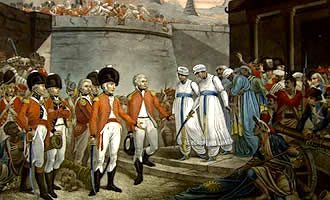

The civil services in India have a rich history. Their evolution reflects the country’s colonial past and subsequent reforms. The development can be traced through various key milestones that shaped the structure and function of civil services.
Early Structure of Civil Services
Before the Charter Act of 1833, the East India Company controlled civil service appointments. The Court of Directors nominated civil servants. Young Englishmen pursued careers as writerships, entering contracts to serve the Company. They were known as ‘Covenanted Servants’.
Covenanted vs. Uncovenanted Servants
Covenanted Servants enjoyed better job security and benefits. Uncovenanted personnel had limited roles and lacked formal recognition. Over time, the distinction blurred as the need for more personnel grew.
Charter Act of 1853
The Charter Act of 1853 marked change. It ended the patronage system of the East India Company. Open competition for civil service positions was introduced. However, Indians were initially excluded from high-ranking roles.
Indian Civil Services Act of 1861
The Indian Civil Services Act was passed under Lord Canning. It reserved certain positions for covenanted civil servants. The examination was conducted in English, focusing on classical knowledge. Over time, the age limit for candidates was gradually reduced.
Statutory Civil Service (1878-1879)
Lord Lytton introduced the Statutory Civil Service. This allowed Indians from elite families to fill one-sixth of covenanted positions through local nominations. The system proved ineffective and was later repealed.
Aitchison Commission (1886)
The Aitchison Commission, led by Sir Charles Aitchison, aimed to include more Indians in government roles. It recommended abolishing the Statutory Civil Service. The commission proposed dividing civil services into three groups – Imperial, Provincial, and Subordinate.
Montagu-Chelmsford Reforms (1919)
The Government of India Act of 1919 introduced reforms. It categorised services into All India, Provincial, and Subordinate. All India Services received special protections regarding dismissal, pay, and pensions. A Public Service Commission was proposed for fair recruitment.
Lee Commission (1924)
The Lee Commission was established in 1923. It examined the racial composition of superior Indian public services. The commission recommended that 20% of recruits should come from provincial services. It suggested a balanced recruitment of British and Indian candidates.
Government of India Act (1935)
The Government of India Act of 1935 aimed to establish a Federal Public Service Commission. It also proposed Provincial Public Service Commissions. Despite these advancements, control remained largely in British hands. The Indianisation of civil services did not translate into political power for Indians.
Role of Civil Services in Administration
During the colonial period, civil services played important role in administering newly acquired territories. They were responsible for maintaining law and order, implementing policies, and managing resources. However, their limited representation of Indians led to growing discontent.
Challenges Faced by Indian Candidates
Indian candidates faced numerous challenges in entering civil services. The examination system was often biased. Language barriers and a lack of access to quality education hindered their opportunities.
Calls for Indianisation
The demand for Indianisation of civil services grew over time. Indian leaders argued for greater representation in administration. They sought reforms that would allow Indians to hold positions of power.
Impact of the Independence Movement
The struggle for independence intensified calls for reform in civil services. Indian leaders brought into light the need for an inclusive administrative structure. The civil services became a focal point for discussions on governance and representation.
Post-Independence Reforms
After independence in 1947, reforms were implemented. The Indian Administrative Service (IAS) was established. This aimed to create a more representative civil service. The focus shifted to merit-based recruitment and training.
Modern Civil Services
Today, civil services in India are structured into various categories. The IAS, Indian Police Service (IPS), and Indian Foreign Service (IFS) are prominent. Recruitment is conducted through competitive examinations, primarily the UPSC Civil Services Exam.
Training and Development
Training for civil servants is rigorous. The Lal Bahadur Shastri National Academy of Administration (LBSNAA) conducts training for IAS officers. Training includes policy formulation, public administration, and leadership skills.
Role of Public Service Commissions
Public Service Commissions play a vital role in recruitment. They ensure transparency and fairness in the selection process. State Public Service Commissions operate at the state level, conducting examinations for state civil services.
Challenges in Modern Civil Services
Modern civil services face several challenges. Bureaucratic red tape can hinder effective governance. Corruption and inefficiency are ongoing concerns. Civil servants must navigate complex political landscapes.
Reforms for Efficiency
To enhance efficiency, reforms are continuously proposed. Digitalisation of services aims to streamline processes. E-governance initiatives are being implemented to improve service delivery.
Women in Civil Services
The representation of women in civil services has increased. Policies promoting gender equality have been introduced. Women now occupy positions within the civil services.
Importance of Civil Services
Civil services are crucial for governance and development. They implement government policies and ensure public welfare. Their role in maintaining law and order is vital for societal stability.
Future of Civil Services
The future of civil services will likely involve further reforms. Emphasis on technology and innovation is expected. Adapting to changing societal needs will be essential for effective governance.


