
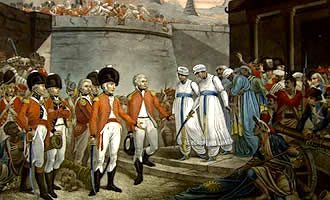

Education in India has deep roots. Before British rule, India had systems like Gurukulas and Madrassas. These institutions focused on holistic learning. The British introduced modern education, viewing it as a tool for control. They aimed to create a class of subordinates who understood Western ideals. The initial focus was limited, as the East India Company prioritised profit over education.
Early British Influence
The East India Company had little interest in education for the first 60 years. Their goal was to have a few knowledgeable Indians for administration. Missionaries played a key role in introducing Western education. They established schools to promote their religious beliefs. Education was a means to civilise and convert the local population.
Charter Act of 1813
The Charter Act marked shift. It allowed missionaries to spread education in India. The Act allocated one lakh rupees annually for educational purposes. However, this amount was insufficient for the vast population. Progress was slow and limited in scope.
Lord Macaulay’s Minute, 1835
Lord Macaulay arrived in India in 1834. He was tasked with resolving educational conflicts. His Minute outlined a new educational policy. Macaulay advocated for English education over traditional learning. This policy aimed to create a class that could serve British interests.
Wood’s Despatch, 1854
The Wood’s Despatch was a very important document in Indian education. It called for a comprehensive survey of education. The report recommended mass education. It aimed to establish a structured education system across India. This despatch is often referred to as the “Magna Carta” of education.
Education under Crown Rule
With the transition to Crown rule, education policies evolved. The Hunter Education Commission (1882-83) assessed the Wood’s Despatch. It emphasised state responsibility for primary and secondary education. The commission proposed a dual system of secondary education – literary and vocational.
The Indian Universities Act, 1904
This Act placed all Indian universities under government control. It aimed to reduce revolutionary activities in institutions. The government had the power to nominate university fellows. Stricter regulations were introduced for university affiliations.
Government Resolution on Education Policy, 1913
The British government resisted calls for compulsory primary education. They aimed to avoid responsibility for mass education. However, they promised to address illiteracy. Provincial governments were encouraged to promote free elementary education.
Sadler University Commission (1917-19)
Originally focused on Calcutta University, this commission reviewed all universities. It led to the establishment of seven new universities. Education was decentralised under the Montagu-Chelmsford Reforms. This transition caused financial strain in the education sector.
Education under Dyarchy
The Hartog Committee (1929) evaluated the education system. It concluded that compulsory education was unnecessary if primary education was available. The committee recommended restricting university admissions to improve standards.
Sergeant Plan of Education
The Sergeant Plan, devised in 1944, aimed for comprehensive education reform. It proposed pre-primary education and free, compulsory elementary education. The plan envisioned high school education and vocational training. However, it lacked a clear implementation strategy.
Development of Vernacular Education
Vernacular education gained importance in the 19th century. Reports by William Adam brought into light flaws in the system. Lord Dalhousie supported vernacular education in 1853. Wood’s Despatch included provisions for standardisation and teacher training.
Expansion of Vernacular Schools
From 1854 to 1871, vernacular education expanded . The number of vernacular schools increased fivefold. The Hunter Commission advocated for further improvement in vernacular education. By 1904, funding for vernacular education was prioritised.
Technical Education Development
Technical education began with the establishment of engineering colleges. The Roorkee Engineering College was founded in 1847. The Calcutta College of Engineering followed in 1856. Lord Curzon promoted professional courses in various fields.
Medical Education in India
Medical education started with the founding of a medical college in Calcutta in 1835. This marked the beginning of formal medical training in India. The focus on technical and medical education expanded under British rule.
Evaluation of British Education Policies
British education policies were often self-serving. They neglected traditional Indian learning systems. The lack of support led to a decline in indigenous knowledge. By 1911, illiteracy rates were alarmingly high at 84%. The focus on English education created a divide between the educated elite and the masses.
Socioeconomic Impact of Education
Education became a privilege for the wealthy and urban classes. The cost of education limited access for the poor. Women’s education was largely ignored due to societal norms. This neglect perpetuated gender inequality in education.
Challenges in Mass Education
Mass education faced numerous challenges under British rule. The government showed little interest in eradicating illiteracy. The focus remained on producing a small, educated workforce. This approach left vast sections of society uneducated.
Legacy of British Educational Policies
The legacy of British education remains complex. While it introduced modern education, it also reinforced social hierarchies. The divide between the educated and uneducated widened. The impact of these policies is still felt in contemporary India.


