
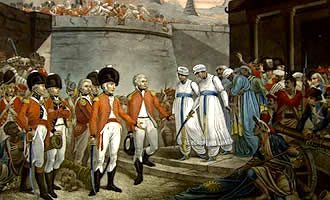

During British rule in India, the country was divided into provinces for efficient governance. The three major provinces were Bengal, Madras, and Bombay, known as Presidencies. Each was governed by a Governor and assisted by three Executive Councils appointed by the British Crown. These Presidencies held more authority than other provinces.
Structure of Governance
The remaining provinces were administered by Lieutenant Governors and Chief Commissioners. These officials were appointed by the Governor-General of India. The administration structure was hierarchical. The central government held power over provincial matters.
The Act of 1861
The Government of India Act 1861 marked shift towards decentralisation. It mandated the establishment of legislative councils in the major provinces. These councils were advisory bodies. They included officials and a limited number of non-official Indians and Englishmen. However, they lacked true democratic representation.
Financial Centralisation Issues
Under the centralised system, all revenues were collected by the central government. This revenue was then redistributed to provincial governments. However, this system was inefficient. The central government struggled to monitor provincial revenue collection and expenditure.
Disagreements and Inefficiencies
Frequent disputes arose between central and provincial governments over administrative and financial details. Provincial governments had little incentive to manage their finances prudently. This led to a call for reforms in public finance.
Decentralisation Initiatives by Lord Mayo
In 1870, Lord Mayo initiated reforms to separate central and provincial finances. Fixed sums were allocated to provinces for specific services. These included police, education, and medical services. This allowed provinces more autonomy in managing their finances.
Expansion of Financial Autonomy
In 1877, Lord Lytton expanded financial autonomy for provinces. More heads of expenditure were transferred to provincial governments. This included land revenue and excise duties. Provinces were entitled to a share of income from specific local revenue sources.
Reforms by Lord Ripon in 1882
Lord Ripon introduced further changes in 1882. The fixed grants system was abolished. Provinces could now retain all income from certain revenue sources. They also received a fixed share of overall income. This reform aimed to enhance provincial financial independence.
Classification of Revenue Sources
All revenue sources were categorised into three groups – General, Provincial, and those shared between central and provincial governments. This classification aimed to clarify financial responsibilities. The arrangements were subject to review every five years.
Establishment of Local Bodies
To address financial difficulties, the British government promoted local governance through municipalities and district boards. Initial local bodies were formed between 1864 and 1868. However, they were largely composed of nominated members and lacked genuine representation.
Lack of Representation in Local Bodies
The early local bodies were presided over by District Magistrates. They were seen as extensions of colonial rule rather than true local self-governments. The Indian population viewed them as mechanisms for increased taxation.
Lord Ripon’s Local Government Policy
In 1882, Lord Ripon introduced a new policy for local governance. This policy aimed to include a majority of non-official members in local bodies. It encouraged elections for non-official members. The goal was to enhance local self-governance.
Implementation of Local Governance Reforms
Provincial acts were passed to implement Ripon’s policy. However, elected members remained a minority in district boards and municipalities. The voting rights were limited to a small segment of the population. This restricted the democratic nature of local governance.
Continued Control by Colonial Administration
District officials continued to preside over district boards. However, non-officials began to take on the role of chairmen in municipal committees. The government retained control over local bodies. It had the power to suspend or dissolve them at will.
Characteristics of Local Bodies
Local bodies operated more like government departments. They lacked true autonomy and were heavily influenced by colonial authorities. The limited democratic processes undermined their legitimacy in the eyes of the Indian populace.
Impact of Local Governance Structures
The establishment of local bodies aimed to improve governance at grassroots levels. However, the lack of genuine representation hindered their effectiveness. Many Indians remained sceptical of these local institutions.
Evolution of Provincial Administration
Over time, the provincial administration evolved. The British government gradually recognised the need for local governance. However, true autonomy and representation remained elusive for the majority of the Indian population.


