The decline of Italy's economic dominance in Europe marked a significant shift in the balance of power from the Mediterranean to the northern countries. For centuries, Italy had...
Feudalism was a social and economic system that dominated the medieval period in Europe. It was characterized by a hierarchy of lords and vassals, where the lords owned...
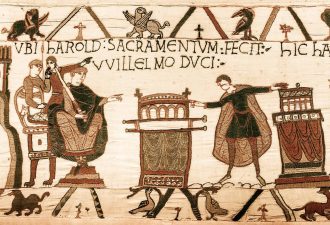
Feudalism was a hierarchical system that structured society during the Middle Ages. At the heart of this system were the relationships between lords and vassals, bound by oaths...
The advent of gunpowder and cannons marked a significant turning point in military history. These new technologies began to shift the balance of power away from the feudal...
The medieval period witnessed the emergence and development of a socio-economic and political system known as feudalism. This system, which first appeared in Western Europe and later spread...
Feudalism was a hierarchical system that structured society around relationships derived from the holding of land in exchange for service or labour. At the heart of this system...
In medieval times, the structure of society was deeply intertwined with the feudal system, which dictated the social and economic relationships between different classes. This system was based...
The concept of estates in historical societies played a significant role in shaping the social and political structures of the time. These estates were not just a division...
Feudalism was a complex and hierarchical system that dominated much of medieval Europe. It structured society in a way that individuals were largely confined to the social class...
The medieval period was marked by the distinct social and military institution of knighthood, which played a crucial role in the feudal system that dominated Europe. Knights were...