Allocative efficiency: Production of maximum output possible, using given quantities of inputs and available techniques of production in the most e?cient manner. Asymmetric information: A situation in which...
Automatic stabilizer: Any government programme or policy that will counteract the business cycle without any new government action. Autonomous spending: part of planned demand for goods that does...
INDCs are plans by governments communicated to the UNFCCC regarding the steps they will take to address climate change domestically. As per the COP 19 decision (Warsaw 2013),...
The 21st Conference of Parties (COP 21) under the United Nations Framework Convention on Climate Change (UNFCCC) successfully concluded in Paris after intense negotiations by the Parties followed...
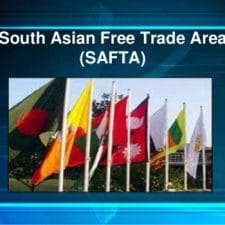
Multilateral trade agreements are the first best solutions for deepening global trade and development as they are founded on the core principles of non-discrimination. Regional trade agreements (RTAs)...
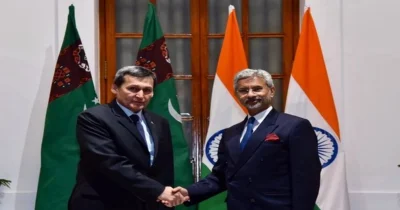
Within Asia, India has signed bilateral FTAs with Sri Lanka (1998), Afghanistan (2003), Thailand (2004), Singapore (2005), Bhutan (2006), Nepal (2009), Korea (2009), Malaysia (2011) and Japan (2011)....
Established in 1964, UNCTAD promotes the development-friendly integration of developing countries into the world economy. UNCTAD has progressively evolved into an authoritative knowledge-based institution whose work aims to...
The Organisation of the Petroleum Exporting Countries (OPEC) is a permanent, intergovernmental Organisation, created at the Baghdad Conference on September 10'14, 1960, by Iran, Iraq, Kuwait, Saudi Arabia...
BRICS is the title of an association of emerging national economies: Brazil, Russia, India, China and South Africa. As of 2013, the five BRICS countries represent almost 3...
The North American Free Trade Agreement (NAFTA) is a regional agreement between the Governments of Canada, United Mexican States and the United States of America to implement a...