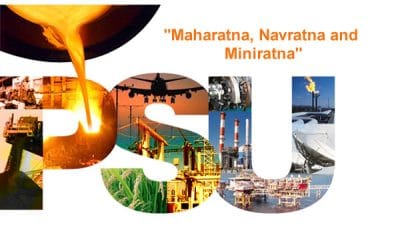
In July 1997, the Government had identified 9 Central Public Sector Enterprises as Navratnas. These enterprises had comparative advantage and potential to emerge as global giants. The Navratna...
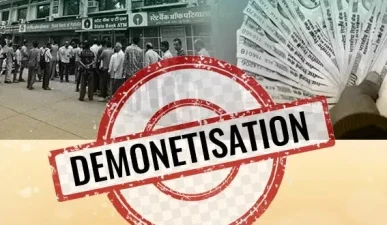
On November 8, 2016, two largest denomination notes, Rs 500 and Rs 1000, were 'demonetized' with immediate effect, ceasing to be legal tender. At one stroke, 86 percent...
In April 1993, the Government of India appointed a committee under Chairmanship of R.N. Malhotra, former Governor of RBI, to look into the possibilities of reforms of the...
Annual Financial Statement shows estimated receipts and expenditure of the Government. The receipts and disbursements are shown under the three parts, in which Government Accounts are kept, viz....
Tax Information Network (TIN) is an initiative by Income Tax Department of India (ITD) for the modernisation of the system for collection, processing, monitoring and accounting of direct...
The Direct Taxes Code Bill, 2010 introduced in Parliament, seeks to consolidate and amend the laws relating to all direct taxes, that this income-tax, dividend distribution tax, and...
The Planning Commission constituted the High Level Expert Committee (HLEC) on Efficient Management of Public expenditure under the Chairmanship of Dr. C. Rangarajan. The terms of reference were:...
The 14th Finance Commission (FFC) was appointed under the Chairmanship of Dr. Y. V. Reddy. Terms of References Principles which would govern the quantum and distribution of grants-in-aid...
VAT is a multi-point destination based system of taxation, with tax being levied on value addition at each stage of transaction in the production/distribution chain. The term 'value...
The introduction of Goods and Services Tax (GST) is a very significant step in the field of indirect tax reforms in India. By amalgamating a large number of...