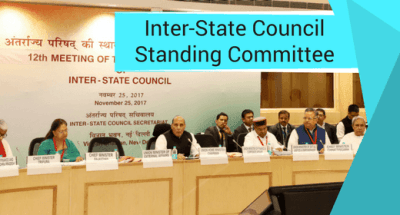
No federal scheme can work effectively unless the Union and the States and/or the States among themselves cooperate and co-ordinate with each other. To promote cooperation and coordination...
Under the 52nd Constitutional Amendment Act (1985) as added with the Tenth Schedule, the law, now, says that a member of Parliament or a state legislature would lose...
Political parties are recognized on the basis of the election results in various States. The national parties, as on October 2004, had been : (1) Indian National Congress...
Consequent upon the 77th report of the Parliamentary Standing Committee, the Right to Information Act 2005 was enacted. The Act came into operation on October 12, 2005. The...
The campaign is the period when the political parties put forward their candidates and arguments with which they hope to persuade people to vote for their candidates and...
The Government of India has adopted a new National Policy for Children, 2013 on April 26th, 2013. The policy recognizes every person below the age of eighteen years...
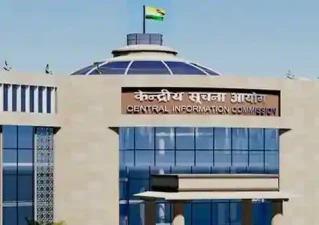
The Act relating to the Right to Information (2003) provides for the organization of the Central Information Commission (CIC) to be responsible for the implementation of the Act,...
Following the Supreme Court of India in its judgment dated 16.11.1992 in a Writ Petition (Civil) No. 930 of 1990 ' Indira Sawhney Others vs. Union of India...
The National Knowledge Commission (NKC) was constituted by the Prime Minister in 2005. The Commission has one Chairperson and seven other members. It was established with the mandate...
The BJP led National Democratic Alliance (NDA) is initiating the task of the examining the pre-2014 government policies with a view to shape, reshape and innovate the policies....