Administrative reforms refer to changes aimed at improving government efficiency. These reforms can enhance public service delivery. They often focus on reducing bureaucracy. Transparency and accountability are key goals. In India, such reforms have evolved over time. They address issues like corruption and inefficiency. Successful reforms can lead to better governance and citizen satisfaction. Ultimately, they aim to strengthen democratic processes.
The Animal Birth Control (ABC) Rules, 2023, aim to control stray dog populations and eradicate rabies through sterilisation and vaccination. Recent developments show the need for a coordinated...
The Swachh Survekshan 2024-25 rankings have once again brought into light India’s leading urban sanitation performers. Indore, Surat, and Navi Mumbai secured the top three positions in the...
The Government of Andhra Pradesh introduced the Revised Guidelines for Building Permissions under the Self-Certification Scheme (SCS) 2025 on 13 July 2025. This move aims to accelerate construction...
The North Eastern Region (NER) District Sustainable Development Goals (SDG) Index 2023-24 marks step in tracking development across eight states of India’s Northeast. Released by NITI Aayog and...
The Government of India released data revealing the human toll of the COVID-19 pandemic's second wave in 2021. This report indicates that nearly 2.1 million more deaths occurred...
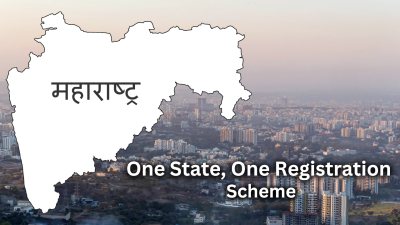
The Maharashtra state government introduced the One State, One Registration scheme on May 1, 2025. This initiative allows citizens to register property documents at any sub-registrar office within...
The Supreme Court of India has recently brought into light critical issues concerning road safety and the immediate assistance for accident victims. The court's bench, comprising Justices Abhay...
The Securities and Exchange Board of India (Sebi) announced important updates regarding the regulatory framework for Specialized Investment Funds (SIF). These changes aim to enhance investment strategies while...
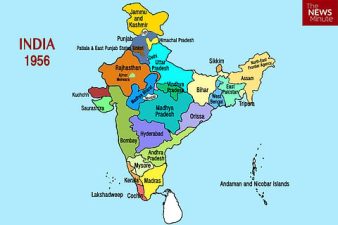
The Reorganisation of States in India was reform post-independence. The States Reorganisation Act of 1956 aimed to reorganise state boundaries based on linguistic and cultural lines. This act...
By 1818, the British had established control over most of the Indian subcontinent. Punjab and Sindh were notable exceptions. British rule varied in nature; some regions were directly...