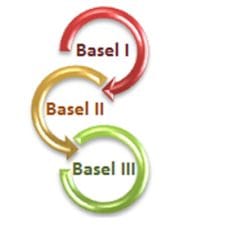
Basel III is a global regulatory framework. It aims to strengthen bank capital requirements. The framework enhances risk management practices. It was developed in response to the 2008 financial crisis. Basel III focuses on improving the banking sector's resilience. It sets minimum capital ratios and introduces liquidity requirements. This framework is crucial for maintaining financial stability worldwide.
The Reserve Bank of India (RBI) has recently released draft guidelines on minimum capital requirements for market risk in accordance with Basel III standards. These guidelines aim to...
The Biodiversity Convention was opened for signature at the Earth Summit in Rio de Janeiro (1992) and entered into force on 29th December, 1993. The year 2010 was...
One of the key elements of Basel III is the introduction of much stricter definition of capital. Better quality capital means the higher loss absorbing capacity. is in...
The requirement that banks maintain minimum capital adequacy ratios is an essential component of the prudential regulation of banks. There has been an international harmonization of capital adequacy...
The Reserve Bank of India (RBI) recently revoked the license of Mumbai-based CKP Co-operative Bank. The decision was triggered by the bank's unsustainable and highly adverse financial position,...
In a significant move to soften the economic impact of the ongoing coronavirus pandemic and lockdown, the Reserve Bank of India (RBI) has introduced a set of initiatives....
Maritime trade in Early South India and the Sangam Age (c. 3rd Century BCE to 3rd Century CE) represented a sophisticated trans-oceanic commercial network. It connected the Indian...
The land revenue system under the Mauryan Empire represented the most systematic and centralized fiscal apparatus in ancient Indian history. Grounded in the principles of Kautilya’s Arthashastra and...
The influx of socialist ideas into the Indian National Movement during the 1920s and 1930s radically shifted the discourse from political freedom (Swaraj) to socio-economic emancipation. Influenced by...
The First Buddhist Council (referred to in canonical literature as the Pathama Sangiti or Sattasatika) was convened in 483 BCE (traditionally aligned with the year of the Buddha's...