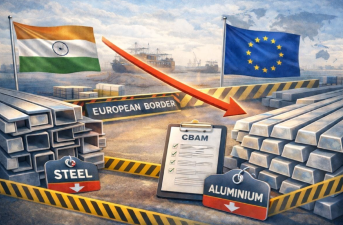
The Carbon Border Adjustment Mechanism (CBAM) aims to reduce carbon emissions. It imposes tariffs on imported goods based on their carbon footprint. This policy encourages countries to adopt greener practices. It also protects domestic industries from unfair competition. The mechanism is part of broader climate change initiatives. It seeks to promote sustainability in global trade. The impact on developing nations remains a concern.
The year has begun on a worrying note for Indian exporters with the European Union extending its Carbon Border Adjustment Mechanism (CBAM) to imports. From 2026, Indian exports...
Recent discussions at the climate conference in Baku brought into light tensions between climate objectives and trade practices. Countries like China and India raised concerns about the European...
The Commerce and Industry Ministry in India has made a commitment to shield Indian industries from the European Union's Carbon Border Adjustment Mechanism (CBAM). CBAM is a component...
The European Union (EU) has recently agreed to the world's first Carbon Border Adjustment Mechanism (CBAM), a tariff on carbon-intensive products such as cement and fertilizer. The purpose...