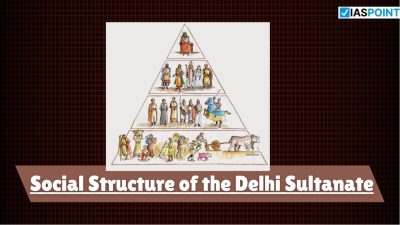
The caste system is a hierarchical social structure in India. It divides people into distinct groups based on birth. Traditionally, there are four main categories: Brahmins, Kshatriyas, Vaishyas, and Shudras. This system has influenced social interactions and economic opportunities. Despite legal abolition, its effects persist in society. Reform movements continue to challenge caste discrimination and promote equality.
The Delhi Sultanate (1206-1526) was a period of political and cultural change in India. It influenced the social structure, particularly in terms of caste, gender roles, and religious...
The Gurjara-Pratiharas rose to prominence in the 8th century. They successfully resisted Arab incursions under the leadership of Nagabhata I. The dynasty's capital was Kannauj, a key political...
The 'Urban Decline' theory, primarily championed by historian R.S. Sharma in his seminal work Indian Feudalism (1965), posits that the post-Gupta period (c. 600–1200 CE) witnessed a significant...