The Constitution of India is the supreme law of the country. It was adopted on 26th January 1950. The document outlines the framework for governance. It establishes fundamental rights and duties for citizens. The Constitution also defines the structure of government. It promotes justice, liberty, and equality. It reflects India's diverse culture and values. Amendments can be made to address changing needs.
The Right to Information (RTI) Act, a landmark law in India, recently completed 20 years. Beawar in Rajasthan, known as the RTI City, celebrated 30 years of its...
The politics of welfare in India increasingly focuses on women through direct cash transfer schemes. Recently, Bihar launched the Mukhyamantri Mahila Rojgar Yojana, providing ₹10,000 to 75 lakh...
The National Cadet Corps (NCC) remains one of India’s premier youth organisations. Established soon after Independence, it aims to build character and leadership among young citizens. However, despite...
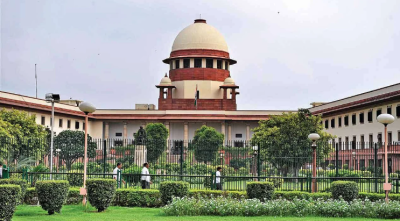
The Supreme Court of India has evolved since the 1950s. Initially, it met only a few days a year for brief sessions. Today, it functions for over 190...
The Supreme Court of India reaffirmed the critical need to exercise preventive detention powers sparingly. The Court emphasised that such powers must adhere strictly to constitutional safeguards. Recent...
The Insurrection Act has again become a topic of national debate in the United States in 2025. Former President Donald Trump threatened to invoke this law to deploy...
India’s Goods and Services Tax (GST), launched eight years ago, was hailed as a landmark in cooperative federalism. It required the Centre and states to pool tax sovereignty...
Internet shutdowns have become a frequent tool used by Indian authorities to manage public order during crises. On 2 October 2025, the Government of Uttar Pradesh suspended internet...
Recent events have brought into light a grave crisis in India’s drug safety and regulatory system. The deaths of 14 children in Madhya Pradesh after consuming toxic cough...
Recent developments in the U.K. have reignited global discussions on euthanasia. The U.K.’s House of Commons passed the Terminally Ill Adults (End of Life) Bill allowing physician-assisted dying...