Constitutional provisions are essential elements of a nation's legal framework. They outline the rights and duties of citizens. These provisions establish the structure of government. They also define the relationship between various state organs. In India, constitutional provisions ensure justice and equality. They reflect the country's diverse culture and history. Understanding these provisions is crucial for upholding democracy and the rule of law.
Articles 294 to 300 of Part XII of the Constitution of India outline the rights, liabilities, and responsibilities of the Union and State governments regarding property, contracts, and...
A linguistic minority is a group whose mother tongue differs from the majority in a specific region. These groups often face challenges in preserving their language and culture....
Advocate General of State is the highest law officer in each state of India. This position is established under Article 165 of the Constitution of India. The Advocate...
The President of India, under Article 76, appoints the Attorney General to advise Government of India on legal matters referred by the President; and represent Government in the...
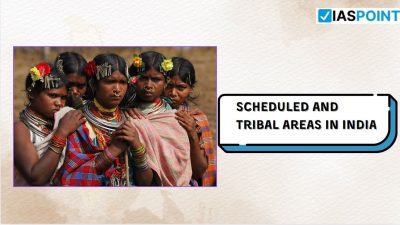
Scheduled Areas are regions in India designated for the administration and welfare of Scheduled Tribes (STs). They cover approximately 11.3% of India's land area. These areas are primarily...
Union Territories (UTs) are regions in India governed directly by the central government. They differ from states, which have their own governments. UTs are established for various reasons,...
Emergency provisions in India allow the President to assume greater powers during crises. These provisions are designed to safeguard the country's sovereignty, unity, and integrity. They are outlined...
The State Council of Ministers (CoM) is the executive authority in states of India. The CoM operates under the guidance of the Chief Minister and is responsible for...
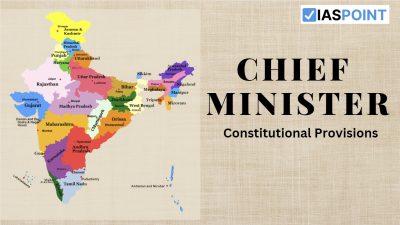
The Chief Minister (CM) is the real head of the state government in India. Unlike the Governor, who serves as the nominal executive, the CM is the real...
The Union Council of Ministers (CoM) is the executive body of the Union Government of India. It plays important role in shaping national policy and implementing laws. The...