Density refers to the mass of a substance per unit volume. It is a crucial concept in physics and engineering. Higher density materials feel heavier than lighter ones. In geography, density can describe population distribution. Urban areas often have higher population density. This affects infrastructure and resource allocation. Understanding density is essential in various fields, including science, economics, and environmental studies.
Researchers at the University of Princeton have introduced a groundbreaking method for lithium production, significantly reducing the land and time requirements. This innovation, known as "String Technology," utilizes...
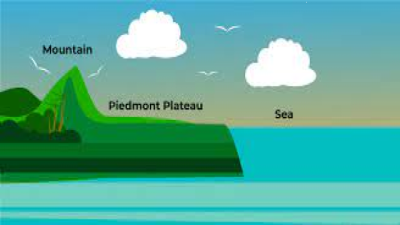
India, known for its rich cultural diversity and breathtaking landscapes, encompasses a wide range of geographical features. Among these, the Great Plains of India hold a special place....
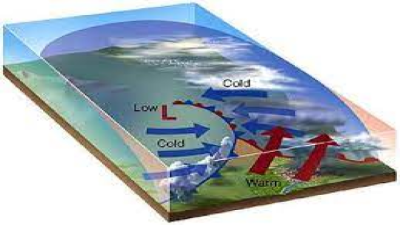
Weather fronts play a pivotal role in shaping our planet's weather patterns, bringing about changes in temperature, humidity, and atmospheric conditions. Frontogenesis and frontolysis are two essential concepts...
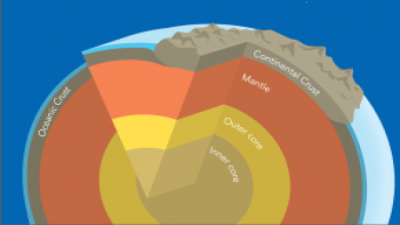
The Earth, our home planet, is a fascinating realm composed of multiple layers that shape its structure and dynamics. These layers vary in density, which plays a crucial...
Recently, scientists have discovered a new form of ice that is completely different from what we have seen so far. This new type of ice, known as medium-density...
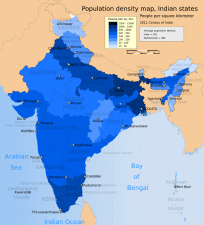
Density of population is a better measure of understanding the variation in the distribution of population. It is expressed as number of persons per unit area. In other...
During the post-Vedic period (c. 6th century BCE to 4th century CE), ancient India witnessed a major transition from the sacrificial, text-centric ritualism of the early Vedic religion...