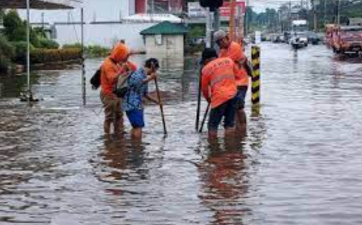
Disaster management involves preparing for, responding to, and recovering from emergencies. It includes planning, training, and resource allocation. Effective communication is crucial during crises. Governments and organisations collaborate to minimise risks. Community involvement enhances resilience. Legal frameworks guide disaster response efforts. Cultural factors influence recovery strategies. Understanding geography aids in risk assessment. Overall, disaster management aims to protect lives and property.
Biofuels remain central to global efforts to reduce carbon emissions and fossil fuel reliance. Recently, demand for biofuels continues to surge, driven by transport sectors worldwide. However, the...
India’s shipping sector is at a very important moment as the world intensifies efforts to combat climate change. Maritime transport contributes nearly 3% of global greenhouse gas emissions....
Recent extreme weather events have brought into light the urgent climate challenges facing India and the world. Central Texas experienced catastrophic flooding in July 2025, killing 88 people...
India’s wind energy sector expanded rapidly in early 2025. The country added about 3.5 GW of wind capacity, an 82% increase from the previous year. This raised the...
Mangroves have gained renewed attention in 2025 for their crucial role in protecting coastlines and supporting economies amid rising climate threats. Despite their importance, these ecosystems have often...
Gujarat produces nearly 75% of India’s salt, with the Little Rann of Kutch (LRK) contributing about one-third. The salt harvesting community, known as the Agariyas, faces increasing threats...
Flooding remains one of the most severe hazards worldwide. Recent studies reveal over 2.3 billion people face flood exposure annually. India alone has more than 600 million at...
India made stride in wetlands conservation at the 15th Ramsar Conference of Parties (CoP15) held in Victoria Falls, Zimbabwe, in July 2025. The country introduced and successfully secured...
Recent studies reveal that human activities are the main cause of increasing heat waves in Africa. Rising greenhouse gas emissions, deforestation, urbanisation, and land-use changes have intensified heat...
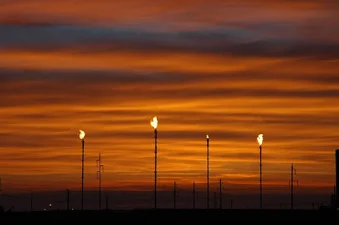
Gas flaring emissions reached critical levels in 2024. The World Bank’s latest report reveals a total of 389 million tonnes of carbon dioxide equivalent (MtCO₂e) emitted worldwide. This...