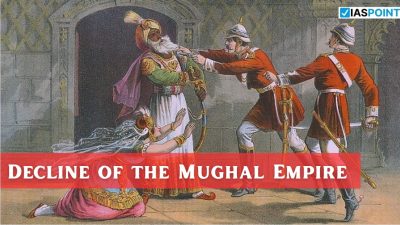
Historical decline refers to the gradual deterioration of a society or civilisation over time. It can manifest in various forms, such as economic downturns, cultural stagnation, or political instability. Factors contributing to historical decline may include foreign invasions, internal strife, or environmental changes. Understanding this concept is crucial for analysing the trajectory of nations and their historical contexts.
Aurangzeb Alamgir, meaning "World Conqueror," became the Mughal Emperor in 1658. He ascended the throne after defeating his brothers, including Dara Shukoh, in a brutal war of succession....
The period following Aurangzeb's death is marked by the rise of the Later Mughals. This era, lasting until approximately 1761 CE, is characterized by weakened central authority and...
Land grants were the foundational instrument of the early medieval transition (c. 600–1200 CE), facilitating a shift from centralized bureaucracy to a decentralized agrarian economy. Initially practiced under...