Icy moons are celestial bodies orbiting planets. They are primarily composed of water ice. These moons may harbour subsurface oceans. This raises the possibility of extraterrestrial life. Notable examples include Europa and Enceladus. Scientists study these moons for clues about the solar system's history. Their unique environments could offer insights into astrobiology. Exploration missions aim to uncover their secrets.
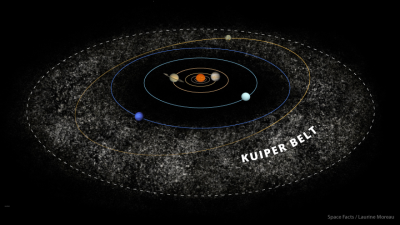
Located beyond the orbit of Neptune, the Kuiper Belt is a fascinating region of our solar system. It is home to numerous small, icy bodies that offer valuable...
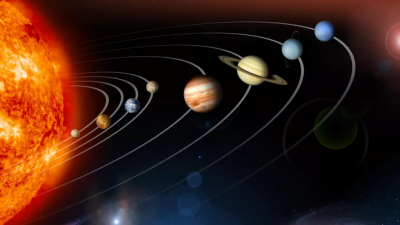
The solar system is a fascinating cosmic arrangement that consists of the Sun, planets, moons, asteroids, comets, and other celestial bodies. It is a remarkable example of the...
The celestial bodies revolving around the sun in our solar system have been the subjects of various studies and investigations. Recently, research calculating the accurate length of a...
India shares over 15,000 km of land borders and a vast coastline with its neighbors. The development of border infrastructure is a strategic imperative for national security, border...
The India-Myanmar border spans approximately 1,643 kilometers, running along the high-altitude, heavily forested ridges of the Purvanchal Hills and the Northern Arakan Yoma mountain ranges. It serves as...
Population distribution refers to the spatial arrangement of people across the geographical expanse of the country. India’s population distribution is highly uneven, dictated by a complex interplay of...