Legislative powers refer to the authority to make laws. In India, Parliament holds these powers. It consists of Lok Sabha and Rajya Sabha. Legislative powers enable the government to enact policies. They shape the nation’s legal framework. These powers are essential for governance. They ensure representation and accountability. Legislative powers can influence various aspects of society.
Doctrines are fundamental principles or rules in law. They guide the interpretation and application of legal frameworks. In the Indian context, these doctrines help resolve conflicts between legislative...
Union Territories (UTs) are regions in India governed directly by the central government. They differ from states, which have their own governments. UTs are established for various reasons,...
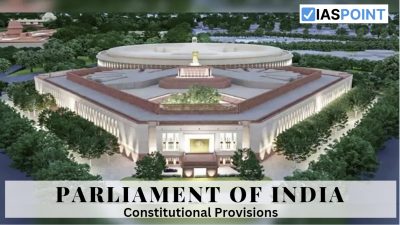
The Parliament of India is the supreme legislative body of the country. It operates under a bicameral system, comprising two houses - the Lok Sabha (House of the...
The Governor is the highest constitutional authority in a state in India. This role serves as both the nominal executive head and an agent of the Central Government....
The President of India serves as the head of state and the first citizen of the nation. The role is largely ceremonial but holds constitutional powers. The President...