Political dynasties are influential families that dominate political landscapes. They often maintain power across generations. This phenomenon can be seen globally, including in India. Prominent examples include the Nehru-Gandhi family. Such dynasties can shape policies and governance. Critics argue they hinder democratic processes. Supporters claim they provide stability and continuity. Their impact on democracy and governance remains a contentious issue.
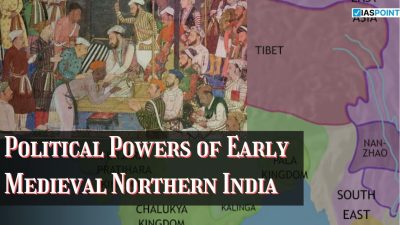
The early medieval period (750-1000 CE) in Northern India was characterised by the dominance of three major political powers - the Gurjara-Pratiharas, the Palas, and the Rashtrakutas. These...
The transition from the Ancient to the Medieval period in India, spanning roughly from 600 CE to 1200 CE, is characterized by the breakdown of the centralized imperial...