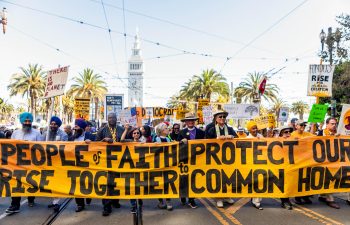
Religion shapes identities and cultures. It influences laws and social norms. In India, it plays a significant role in daily life. Diverse faiths coexist, enriching the nation’s heritage. Festivals and rituals reflect this diversity. Religious beliefs impact politics and community relations. Understanding religion is essential for grasping India's complexities. It is a vital aspect of its history and social fabric.
Religion plays a complex role in society. It can both instigate and inhibit social change. Various sociological perspectives offer differing views on this relationship. About these perspectives helps...
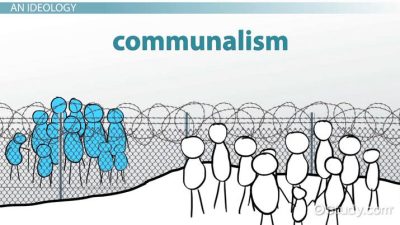
Communalism is a political ideology that promotes allegiance to a religious community. It asserts that followers of a specific religion share common interests that are distinct from those...
The Sultanate of Golconda was a prominent kingdom in southern India. Established in 1518, it was ruled by the Qutb Shahi dynasty. This dynasty had Persianate roots and...
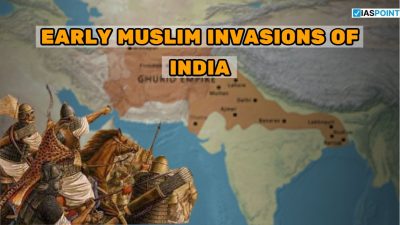
The early Muslim invasions of India marked historical changes. The first notable invasion occurred in 711 AD by the Arabs, led by Muhammad Bin Qasim. The Turks, notably...
The regionalization of power in early medieval India (c. 600–1200 CE) represents a shift from the pan-Indian empires of the Guptas to a mosaic of smaller, localized political...
The transition from the Gupta period to the early medieval era was marked by the decline of centralized imperial authority and the emergence of regional political configurations. This...
Temple inscriptions are among the most prolific and detailed sources for studying Medieval Indian history, particularly in the Deccan and South India. Unlike royal copper-plate grants, which were...
The period between 600 CE and 1200 CE marked a transition from a simplified Varna-based society to a complex, fragmented social structure characterized by the proliferation of Jatis....