State governance refers to the administration of a state within a country. It involves the implementation of laws and policies. State governments manage resources and public services. They ensure compliance with constitutional mandates. Governance structures vary across regions. They reflect local needs and cultural contexts. Effective governance promotes development and stability. Challenges include corruption and bureaucratic inefficiency. Strong governance is vital for citizen welfare.
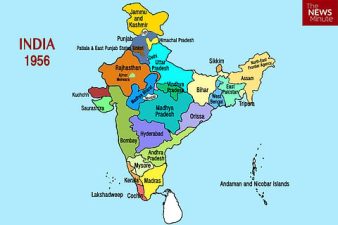
The Reorganisation of States in India was reform post-independence. The States Reorganisation Act of 1956 aimed to reorganise state boundaries based on linguistic and cultural lines. This act...
Article 371 of the Constitution of India provides special provisions for certain states. It aims to address the unique needs of specific regions. This article was incorporated through...
Advocate General of State is the highest law officer in each state of India. This position is established under Article 165 of the Constitution of India. The Advocate...
The State Council of Ministers (CoM) is the executive authority in states of India. The CoM operates under the guidance of the Chief Minister and is responsible for...
The Chief Minister (CM) is the real head of the state government in India. Unlike the Governor, who serves as the nominal executive, the CM is the real...
The Governor is the highest constitutional authority in a state in India. This role serves as both the nominal executive head and an agent of the Central Government....