Transparency refers to the clarity and openness of processes. It fosters trust in institutions. In governance, transparency ensures accountability. Citizens can access information easily. This principle is vital in law and public administration. It promotes ethical practices. In business, transparency builds consumer confidence. Overall, it enhances democratic values. A transparent society encourages participation and informed decision-making. It is essential for progress and development.
On June 12, 2025, Air India Flight 171 crashed barely a minute after taking off from Ahmedabad, killing all but one of the 242 passengers on board and...
The recent political turmoil surrounding the Union Public Service Commission's (UPSC) advertisement for 45 posts through lateral entry has brought into light important issues in India's civil service...
The Central Consumer Protection Authority (CCPA) introduced new guidelines to combat misleading advertisements in the coaching sector. This initiative aims to protect students from deceptive practices that often...
Corporate Social Responsibility (CSR) has gained prominence in India since the Companies Act 2013 mandated it. The act requires companies to allocate a portion of their profits towards...
The Internal Audit Wing (IAW) of the Ministry of Rural Development has revealed financial discrepancies in the implementation of various rural development schemes for the financial year 2023-24....
In the wake of the Haryana Assembly polls, the Election Commission of India (ECI) faced scrutiny over the integrity of the voting process. Allegations from the Congress party...
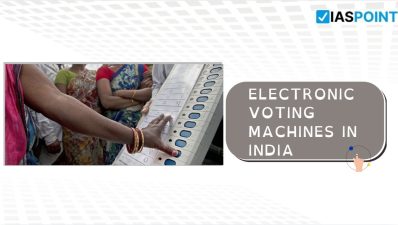
Electronic Voting Machines (EVMs) are devices used to facilitate the voting process in elections. They allow voters to cast their votes electronically, replacing traditional paper ballots. The first...
The Central Information Commission (CIC) is a statutory authority in India. It was established to ensure transparency and accountability in public authorities. The CIC operates under the Right...