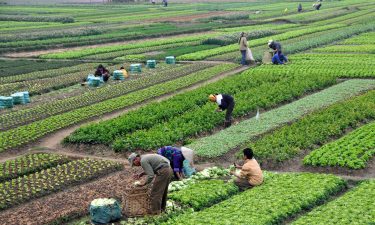
The concept of Food Security has evolved from simple "physical availability" in the 1970s to a multi-dimensional framework today. According to the 1996 World Food Summit, food security...
The debate over agricultural reforms in India centers on the transition from a state-led, regulated marketing structure to a liberalized, market-driven ecosystem. While the objective of doubling farmers'...
A Farmer Producer Organization (FPO) is a legal entity formed by primary producers, viz. farmers, milk producers, fishermen, weavers, and artisans. It is a hybrid between a cooperative...
Contract farming is a pre-harvest agreement between farmers (producers) and buyers (such as food processing units, exporters, or retail chains) for the production and supply of agricultural products...
India has emerged as a global powerhouse in agriculture, consistently maintaining a trade surplus in this sector. Agricultural exports are a critical component of the "Agricultural Marketing and...
The National Agriculture Market (e-NAM) is a pan-India electronic trading portal launched on April 14, 2016. It serves as a virtual platform that networks existing Physical Agricultural Produce...
The cold chain is an temperature-controlled supply chain that includes refrigerated production, storage, and distribution activities. In the Indian economy, it is a critical component of post-harvest management,...
Warehousing in India serves as a critical bridge between harvest and consumption, acting as a safeguard against price volatility and post-harvest losses. The sector is governed by a...
Buffer stock refers to the surplus foodgrain reserves maintained by the Government of India, primarily consisting of wheat and rice. This mechanism is designed to manage market fluctuations,...
Procurement in India is the process by which the government, through various agencies, purchases agricultural produce directly from farmers at the Minimum Support Price (MSP). This mechanism serves...