Convection is the mode of heat transfer that occurs exclusively within fluids (liquids and gases) through the actual macroscopic bulk movement of the fluid particles themselves. Unlike conduction,...
Conduction is the mechanism of heat transfer through a material medium via direct microscopic collisions of particles and the movement of free electrons, without any macroscopic, bulk, or...
Heat transfer is a discipline of thermal science that concerns the generation, use, conversion, and exchange of thermal energy between physical systems. It dictates that whenever a temperature...
Latent heat, which translates literally to "hidden heat," is the quantity of heat absorbed or released by a substance during a change in its physical state (phase change)...
When heat energy is added to a substance, its constituent molecules absorb this energy, increasing their kinetic energy and leading to a rise in temperature. However, different substances...
Thermal expansion is the tendency of matter to change its shape, area, volume, and density in response to a change in temperature. Microscopic Mechanism Interatomic Potential Energy: On...
Thermometry is the branch of physics that deals with the measurement of temperature. To measure temperature quantitatively, scientists utilize specific physical properties of matter that change continuously and...
In thermodynamics, heat and temperature are distinct but fundamentally interrelated concepts. While temperature describes the thermal state of a single body, heat describes the process of energy transfer...
A landmark study by the University of Sydney has established a direct scientific link between rising ambient temperatures and increased veterinary hospitalisation and mortality rates in koalas. The...
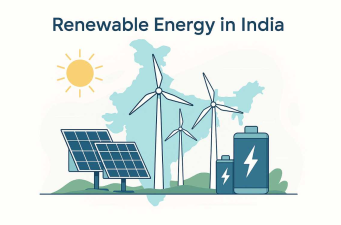
IRENA Renewable Energy Electrification Targets The International Renewable Energy Agency (IRENA) released a report titled "Transitioning Away from Fossil Fuels: A Roadmap Powered by Renewables, Electrification and Grid...