The interaction between soap and hard water represents a classic precipitation reaction in aqueous chemistry. While soap is a highly effective cleansing agent in soft water, its efficiency...
The cleansing action of soap is a surface phenomenon governed by the principles of surface tension, amphiphilic molecular structures, and the thermodynamics of micellar solubilization. Water alone cannot...
Surfactants (surface-active agents) find widespread utility across diverse fields due to their unique molecular structure, which consists of a hydrophilic (water-attracting) head and a hydrophobic (water-repelling) tail. By...
Surfactants, short for surface-active agents, are chemical compounds that decrease the surface tension between two liquids, between a gas and a liquid, or between a liquid and a...
Soaps and detergents are surface-active agents, commonly known as surfactants, which reduce the surface tension of water to facilitate the removal of dirt, grease, and oil from surfaces....
Plastic recycling is the process of recovering scrap or waste plastic and reprocessing the material into functional and useful products. In the study of Polymers and Plastics within...
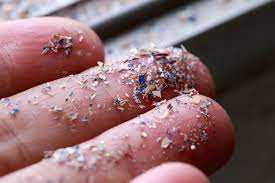
Microplastics are small, solid, polymer particles that are insoluble in water and exhibit a size dimension of less than 5 millimeters ($< 5\text{ mm}$). Within the Polymers and...
Bioplastics are a class of polymeric materials derived from biomass sources—such as corn starch, sugarcane, vegetable fats, oils, or agricultural byproducts—as opposed to conventional plastics, which are synthesized...
Synthetic rubbers are man-made, high-molecular-weight elastomers engineered via the polymerization of petroleum-derived unsaturated hydrocarbon monomers. In basic chemistry, elastomers are defined by their low intermolecular forces (primarily weak...
Rubber is a specialized class of polymers known as elastomers. Elastomers are high-molecular-weight macromolecules characterized by high elasticity, low tensile strength, and the ability to regain their original...