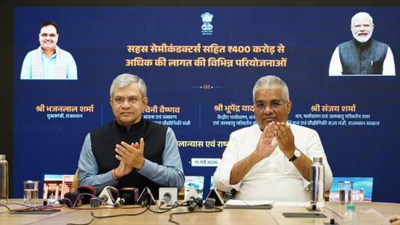
Rajasthan entered the high-technology manufacturing sector with the inauguration of its first semiconductor manufacturing cluster on May 15, 2026, at Bhiwadi in the Alwar district. The facility marks...
The United Arab Emirates accelerated the execution of its West-East Pipeline project on 15 May 2026 to double its crude oil export capacity through the Port of Fujairah...
Energy transition refers to a structural shift in the energy sector from fossil-fuel-based systems of energy production and consumption—including oil, natural gas, and coal—to renewable energy sources like...
Energy pricing paradigms globally and in India oscillate between two primary models: Administered Pricing Mechanisms (APM) and Market-Determined Pricing. Under APM, the government or a statutory regulatory body...
Energy security is defined as the uninterrupted availability of energy sources at an affordable price. In the macroeconomic context of the Indian economy, it involves balancing the energy...
The National Green Hydrogen Mission (NGHM), approved by the Union Cabinet in January 2023 with an initial financial outlay of ₹19,744 crore up to FY 2029-30, represents India's...
The National Solar Mission (NSM)—initially launched as the Jawaharlal Nehru National Solar Mission (JNNSM) in January 2010—is a core pillar of India's National Action Plan on Climate Change...
The transition towards renewable energy in India is a strategic macroeconomic objective designed to decouple economic growth from greenhouse gas emissions, insulate the current account deficit from global...
Power sector reforms in India reflect a strategic transition from a state-monopolized, vertically integrated utility model to a competitive, unbundled, and market-driven architecture. This shift balances the concurrent...
The electricity sector in India operates under a concurrent jurisdiction pursuant to Entry 38 of List III (Concurrent List) of the Seventh Schedule of the Constitution of India....