
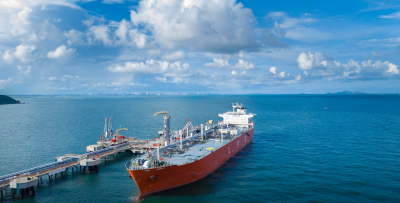
The United Arab Emirates accelerated the execution of its West-East Pipeline project on 15 May 2026 to double its crude oil export capacity through the Port of Fujairah by 2027. This directive, issued by Abu Dhabi Crown Prince Sheikh Khaled bin Mohamed bin Zayed Al Nahyan to the Abu Dhabi National Oil Company, aims to scale bypass capacity from 1.8 million barrels per day to nearly 4 million barrels per day. The strategic shift responds directly to Iran’s closure of the Strait of Hormuz on 28 February 2026 during a US-Israeli military campaign, an event that blocked approximately 20 percent of global oil supplies and forced a structural reconfiguration of West Asian energy logistics.
Geopolitical Context and Strategic Rationale
Chokepoint Vulnerability of the Strait of Hormuz
The Strait of Hormuz is a narrow maritime passage separating Iran and Oman, connecting the Persian Gulf with the Gulf of Oman and the Arabian Sea. It represents the world’s most critical energy transit chokepoint. Under normal conditions, nearly 21 million barrels per day of crude oil, condensate, and seaborne liquefied natural gas (LNG) transit this waterway. The closure of the strait by Iran disrupted shipments from major regional producers, including Kuwait, Qatar, Bahrain, and Iraq, which lack alternative overland export routes.
Diversification and Sovereign Autonomy
The disruption caused global energy prices to surge, forcing the United Arab Emirates (UAE) to re-evaluate its export security. The acceleration of the West-East Pipeline project follows the UAE’s formal exit from the Organization of Petroleum Exporting Countries (OPEC) in May 2026. Leaving the cartel allows the nation to pursue independent production targets, including scaling its upstream capacity to 5 million barrels per day by 2027, free from structural group quotas.
Infrastructure Blueprint: West-East Pipeline vs. ADCOP
The Existing Architecture (ADCOP)
Prior to the acceleration of the new pipeline, the UAE relied on the Abu Dhabi Crude Oil Pipeline (ADCOP), also known as the Habshan-Fujairah pipeline. Commissioned in 2012, this 370-kilometer, 48-inch diameter installation transports Murban crude from the inland Habshan fields of Abu Dhabi across the Hajar Mountains to the eastern coast.
The West-East Pipeline Project
The new West-East Pipeline runs parallel to the older grid, spanning approximately 406 kilometers. It connects the same core production nodes in the Abu Dhabi interior directly to the deep-water terminals of Fujairah. By doubling the throughput capacity to nearly 4 million barrels per day, the Abu Dhabi National Oil Company (ADNOC) can route almost its entire sustainable production capacity directly to open-ocean shipping lanes, bypassing the Persian Gulf entirely.
| Infrastructure Metric | Abu Dhabi Crude Oil Pipeline (ADCOP) | Accelerated West-East Pipeline |
| Status | Operational since 2012 | Under active construction (Target: 2027) |
| Length | ~370 Kilometres | ~406 Kilometres |
| Origin Point | Habshan Fields, Abu Dhabi | Habshan Fields, Abu Dhabi |
| Terminus | Port of Fujairah, Gulf of Oman | Port of Fujairah, Gulf of Oman |
| Design Capacity | 1.5 to 1.8 Million Barrels Per Day | Scales total system capacity to ~4 Million Barrels Per Day |
| Primary Risk Managed | Strait of Hormuz maritime blockade | Strait of Hormuz maritime blockade |
Comparative Regional Bypass Systems
The UAE and Saudi Arabia are the only two major oil producers in the Persian Gulf region that possess operational overland pipeline networks capable of diverting crude oil away from the Strait of Hormuz. Other nations rely almost exclusively on maritime tanker transit through the chokepoint.
Saudi Arabia’s East-West Petroline
Saudi Arabia operates the 1,200-kilometer East-West Pipeline (Petroline), which links its eastern oilfields near Abqaiq to the Red Sea port of Yanbu. This system has a nominal design capacity of approximately 5 million barrels per day. However, its operational utility faces secondary security vulnerabilities due to its proximity to regional conflict zones around the Bab el-Mandeb strait and the lower Red Sea.
Oman’s Coastal Advantage
Oman features an extensive coastline situated entirely outside the Persian Gulf, facing the Arabian Sea. While it does not require a complex internal trans-continental pipeline bypass to escape the Hormuz chokepoint, its total production volume remains lower than that of the UAE or Saudi Arabia, limiting its ability to offset global supply deficits during a protracted crisis.
Geoeconomic Importance of Fujairah
Strategic Maritime Location
The Emirate of Fujairah occupies a vital position on the eastern seaboard of the UAE, directly fronting the Gulf of Oman. This location allows international oil tankers to load crude, access maritime services, and receive supplies without navigating the shallow, congested, and legally contested waters of the inner Persian Gulf.
Bunkering and Strategic Storage Capacity
Fujairah has developed into one of the top three bunkering (ship refueling) hubs globally, alongside Singapore and Rotterdam. The port incorporates large underground rock caverns and surface storage tank farms managed by ADNOC and international logistics firms. This infrastructure allows for the long-term stockpiling of commercial and strategic crude reserves outside regional maritime chokepoints.
Implications for Global Energy Security and India
Insulating the Indian Energy Matrix
India imports over 80 percent of its crude oil requirements, relying on West Asian producers for a significant share of its total intake. Disruptions in the Strait of Hormuz directly trigger domestic inflation, spike maritime insurance premiums (War Risk Surcharges), and strain India’s current account deficit. The expansion of the Fujairah export corridor provides India with a secure supply point that remains functional during regional hostilities.
Interlinked Energy Pacts
The pipeline acceleration aligns with deeper bilateral energy agreements between India and the UAE. India maintains rights to commercial and strategic oil storage space within Fujairah’s storage terminals. The availability of an uninterrupted overland supply route to the Fujairah coast ensures that crude can be lifted and transported across the Arabian Sea to Indian refineries in Gujarat and Maharashtra without facing maritime interdiction.
IASPOINT Booster Facts for UPSC
- Murban Crude Characteristics: The primary crude oil grade transported through the West-East pipeline is Murban crude. It is classified as light, sweet crude with an API gravity of around 40.5 degrees and a low sulfur content of 0.7 percent, making it highly prized by Asian refineries for its high yield of gasoline and diesel.
- Habshan Infrastructure Damage: The acceleration directive also comes amid infrastructure recovery efforts; ADNOC’s core Habshan gas processing facility suffered damage from drone strikes earlier in the conflict, requiring systematic restoration alongside the pipeline expansion.
- ICE Futures Abu Dhabi (IFAD): Murban crude is traded as a physically delivered futures contract on the IFAD exchange based in Abu Dhabi. The ability to export reliably from Fujairah reinforces the benchmark status of Murban crude against global standards like Brent and West Texas Intermediate (WTI).
- The Iraq-Turkey Pipeline (ITP) Contrast: While the UAE fast-tracks its southern bypass, northern routes like the ITP (connecting Kirkuk fields to Ceyhan port in Turkey) remain frequently non-operational due to complex geopolitical disputes between Baghdad, Erbil, and Ankara, highlighting the value of single-jurisdiction pipelines like the West-East project.
- The Trans-Arabian Pipeline (Tapline) Legacy: Historically, the earliest attempt to completely bypass the Persian Gulf chokepoint was the Tapline, built in 1950 to carry Saudi oil to Lebanon on the Mediterranean coast. It was abandoned in the late 20th century due to geopolitical fragmentation, making modern pipelines like the West-East corridor critical for contemporary maritime risk management.