
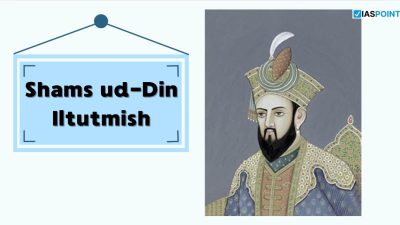
Shams ud-Din Iltutmish was born in 1192 into an affluent family in the Ilbari Turkic tribe. His father, Ilam Khan, was a leader. Jealous of his intelligence and looks, Iltutmish’s brothers sold him into slavery. He was taken to Bukhara and later resold multiple times. Eventually, he came under the service of Qutb ud-Din Aibak, a Ghurid slave-commander.
Rise to Power
Iltutmish distinguished himself in Aibak’s service and was granted the iqta’ of Badaun. His military prowess against the Khokhar rebels earned him recognition from Muhammad of Ghor, the Ghurid ruler. After Ghor’s assassination in 1206, Aibak became an independent ruler in India. Upon Aibak’s death in 1210, Iltutmish dethroned his unpopular successor, Aram Shah, and established his capital in Delhi.
Consolidation of Rule
Iltutmish faced challenges from various dissidents and former Ghurid slaves, including Taj al-Din Yildiz and Nasir ad-Din Qabacha. He fought several campaigns to consolidate his power, subjugating regions in eastern India and asserting his authority over rebellious Hindu chiefs. His military campaigns from 1225 to 1227 were very important in expanding his dominion.
Territorial Expansion
In 1228, Iltutmish invaded the Indus Valley, defeating Qabacha and annexing parts of Punjab and Sindh. His authority was recognised by the Abbasid caliph al-Mustansir, enhancing his legitimacy. He further suppressed rebellions in Bengal and captured Gwalior, expanding his empire .
Administrative Reforms
Iltutmish laid the foundation for a structured administration. He introduced the silver tanka and copper jital as currency. The Iqtadari system was established, dividing the empire into Iqtas assigned to nobles and officers as a form of salary. He also commissioned numerous architectural projects, including mosques and reservoirs.
Titles and Recognition
The name “Iltutmish” translates to “maintainer of the kingdom.” His inscriptions reveal grand titles such as “King of the Kings of the Arabs and the Persians” and “Conqueror of Hind.” He was referred to as “Lititmisi” in Sanskrit inscriptions. His recognition by the Abbasid Caliphate in 1228 marked him as the first independent ruler of Delhi.
Military Campaigns
Iltutmish engaged in numerous military campaigns throughout his reign. He successfully defeated Yildiz at Tarain in 1216, reinforcing his status. He also faced the Khwarazmian threat, which emerged after the Mongol invasions. Despite these challenges, he maintained control over his territories.
Conflicts with Qabacha
Qabacha, a former Ghurid governor, posed threat to Iltutmish. After initial setbacks, Iltutmish defeated Qabacha in 1217, reclaiming Lahore. Qabacha’s demise came in 1228 when he drowned himself after failing to negotiate peace with Iltutmish.
Cultural Contributions
Iltutmish’s reign saw a flourishing of culture and architecture. He constructed several mosques and established educational institutions. His patronage of poets and scholars contributed to the cultural landscape of the Sultanate, encouraging a rich intellectual environment.
Death and Succession
Iltutmish fell ill during a campaign in 1236 and died on 30 April. His death led to political instability in Delhi. He had initially groomed his son Nasiruddin Mahmud as his successor, but after his death, Ruknuddin Firuz took the throne. The subsequent power struggles among his descendants led to further instability.
Legacy
Iltutmish is regarded as a very important figure in Indian history. He is credited with establishing the Delhi Sultanate and laying the groundwork for its future rulers. His administrative reforms and military conquests expanded the Sultanate’s influence across northern India. His recognition by the Abbasid Caliphate solidified his legacy as Islamic ruler in the region.
Notable Achievements
- First Muslim sovereign to rule from Delhi.
- Established a structured administration and currency system.
- Expanded the Delhi Sultanate through military conquests.
- Recognised by the Abbasid Caliphate, enhancing his legitimacy.
- Cultural and architectural developments.
Historical Context
Iltutmish’s reign occurred during a transformative period in Indian history. The decline of the Ghurid Empire allowed for the rise of local powers. The political landscape was marked by conflicts among various factions, including former Ghurid slaves and regional Hindu chiefs.
Influence on Future Rulers
Iltutmish’s policies and military strategies influenced subsequent rulers of the Delhi Sultanate. His establishment of the Iqtadari system was adopted by later sultans, ensuring a stable governance structure. His legacy continued through his daughter Razia, who briefly ruled as a female monarch.
Iqtadari System
The Iqtadari system divided the Sultanate into regions called Iqtas. Each iqta was assigned to a noble or officer in return for military service. This system ensured loyalty and effective governance across the vast territories of the Sultanate.
Architectural Contributions
Iltutmish commissioned numerous structures, including the Qutb Minar complex in Delhi. His architectural legacy reflected the synthesis of Persian and Indian styles, contributing to the region’s cultural heritage. The structures served both religious and administrative purposes.
Economic Policies
Iltutmish’s introduction of the tanka and jital established a stable currency system. This facilitated trade and commerce within the Sultanate. His economic policies aimed to strengthen the financial foundations of the state, ensuring sustainability and growth.
Religious Tolerance
Iltutmish’s reign is noted for a degree of religious tolerance. He employed both Muslim and Hindu officials in his administration. This approach helped maintain stability in a diverse region, encouraging a sense of unity among various communities.
Relationship with the Caliphate
The recognition by the Abbasid Caliphate in 1228 was for Iltutmish. It provided religious legitimacy to his rule. The relationship with the Caliphate also positioned Iltutmish as a key player in the Islamic world, enhancing his status among contemporaries.
The Role of Women
Iltutmish’s daughter, Razia, played important role in the political landscape after his death. She was appointed as heir apparent, showcasing the potential for female leadership in a predominantly patriarchal society. Her brief reign brought into light the complexities of succession during Iltutmish’s era.
Challenges Faced
Iltutmish faced numerous challenges during his reign. These included internal rebellions, external threats from rival powers, and the need to establish legitimacy. His military campaigns were often driven by the necessity to quell dissent and expand his territory.
End of Reign
Iltutmish’s reign ended with his death in 1236, leaving a legacy of military strength and administrative reforms. The political instability that followed brought into light the challenges of succession in a fragmented power structure. His contributions, however, laid the groundwork for the future of the Delhi Sultanate.
Last Modified: December 23, 2024