
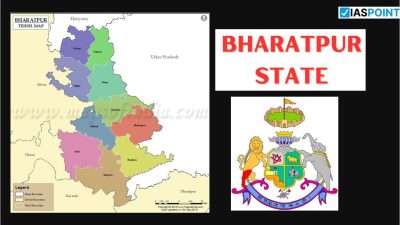
Bharatpur State was a princely state in India, ruled by the Sinsinwar clan of Hindu Jats. It existed under British suzerainty and is notable for its rich history and formidable architecture. The state was established through Jat revolts against Mughal rule, particularly in the regions surrounding Delhi, Agra, and Mathura.
Economic Power
At its peak, Bharatpur State generated revenue. During the reign of Maharaja Suraj Mal from 1755 to 1763, the annual revenue reached 17.5 million gold coins. This economic strength enabled extensive military and architectural projects.
Major Architectural Marvels
Bharatpur is home to architectural achievements.
- Lohagarh Fort: Constructed in 1732 by Maharaja Suraj Mal, this fort is renowned for its impregnable design. It took eight years to build and is situated on an artificial island. The name “Lohagarh” translates to “Iron Fort,” symbolising strength.
- Deeg Palace: Built in 1730, this palace served as a luxurious summer retreat for the rulers. Located 32 km from Bharatpur, it reflects the opulence of the Jat rulers.
Military Resilience
Lohagarh Fort is historically for its military resilience. It withstood multiple sieges, notably during the Siege of Bharatpur in 1805, when British forces led by Lord Lake failed to capture it despite a six-week siege. The fort’s robust design and strategic location contributed to its defensive success.
British Control
The British eventually captured Bharatpur after a prolonged siege from December 1825 to January 1826. On 18 January 1826, the fortress fell, marking the beginning of British control over the princely state.
Historical Background
The Jats of Bharatpur revolted against Mughal authority, leading to the establishment of their state. The initial uprising occurred in 1669, led by Gokula, a local zamindar. Subsequent revolts in 1685 under Raja Ram of Sinsini further solidified Jat resistance against Mughal rule.
Key Historical Figures
Maharaja Suraj Mal is the most prominent ruler of Bharatpur. He captured Agra in 1761 and was known for melting the silver doors of the Taj Mahal. His successors, including Jawahar Singh and Ratan Singh, continued to influence the region’s politics.
Military Conflicts
The military strength of Bharatpur was notable, especially under Jawahar Singh. His army included 25,000 infantry and 15,000 cavalry, supported by European-trained officers. The Battle of Maonda and Mandholi in 1767 showcased the military prowess and conflicts with the Rajputs of Jaipur.
Relations with Jaipur
Suraj Mal maintained cordial relations with the Jaipur rulers. However, tensions escalated after his death. Jawahar Singh’s ambitions and actions led to increased hostilities with the Kachwahas of Jaipur.
Decline of Power
The Jats faced setbacks after the death of Suraj Mal. In 1774, Mirza Najaf Khan, commanding Mughal forces, recaptured Agra and other territories from the Jats. This marked a decline in Jat influence.
Role in the Indian Rebellion
During the Indian Rebellion of 1857, Maharaja Jaswant Singh of Bharatpur supported the British. His loyalty was rewarded with increased honour and recognition within the British administration.
Transition to Modern India
Bharatpur State acceded to India in August 1947, following independence. It became part of the Matsya Union in 1948 and was later merged into Rajasthan in 1949. The royal family continues to be involved in regional politics.
Territorial Expansion
At its zenith in the 1760s, Bharatpur’s territory extended over parts of modern-day Delhi and surrounding regions, including Agra and Aligarh. The Jats established control over vast areas, influencing the socio-political landscape.
Military Structure
Jawahar Singh’s military was well-equipped and structured. His forces included infantry, cavalry, and artillery, reflecting the state’s military capabilities. The Battle of Maonda demonstrated the effectiveness of his army, despite eventual defeat.
Key Battles
The Battle of Maonda was conflict between Bharatpur and Jaipur forces. Jawahar Singh’s army faced defeat, resulting in heavy casualties. The battle brought into light the intense rivalry between the two states and the shifting power dynamics.
Aftermath of Conflicts
Following the defeat at Maonda, Jawahar Singh faced further challenges, including a subsequent defeat at the Battle of Kama. The Jats’ fortunes declined, leading to internal strife and external threats.
Cultural Contributions
Bharatpur State contributed to the cultural heritage of Rajasthan. The architecture, art, and literature from this period reflect the rich traditions of the Jat rulers. Festivals and customs from this era continue to influence the region.
Legacy of the Rulers
The legacy of Bharatpur’s rulers endures in modern politics. Members of the royal family have held positions in the Indian Parliament and state legislature, maintaining their influence in contemporary governance.
Significant Events
Several key events shaped Bharatpur’s history. The capture of Agra, the sieges by British forces, and the involvement in the Indian Rebellion were very important moments that defined the state’s trajectory.
Conclusion of Military Engagements
The military engagements of Bharatpur reflect the complex interplay of power in North India. The Jats’ resistance against Mughals and later confrontations with British forces illustrate the dynamic political landscape of the time.
Modern-Day Bharatpur
Today, Bharatpur is known for its historical significance and wildlife. The Keoladeo National Park, a UNESCO World Heritage Site, attracts tourists and nature enthusiasts. The region retains its cultural richness and historical landmarks.
Tourism and Heritage
Bharatpur’s forts and palaces attract visitors interested in history and architecture. Lohagarh Fort and Deeg Palace are popular tourist destinations, showcasing the grandeur of the Jat rulers.
Current Political Landscape
The descendants of the Bharatpur royal family remain active in politics. They participate in regional and national affairs, continuing their legacy of leadership and governance.
Educational Institutions
Bharatpur has developed educational institutions that reflect its commitment to learning and progress. Schools and colleges in the region promote education and skill development among the youth.
Last Modified: December 23, 2024