
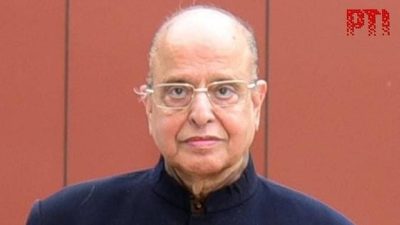
K. Kasturirangan, a prominent Indian space scientist, passed away on [insert date]. He was renowned for his leadership at the Indian Space Research Organisation (ISRO) and his contributions to India’s space programme. His death coincided with the successful landing of Chandrayaan-3 on the Moon, marking milestone for ISRO. Kasturirangan’s legacy is intertwined with the vision of Vikram Sarabhai, the father of India’s space programme.
Early Life and Education
Kasturirangan was born on [insert birth date]. He completed his PhD in cosmic X-rays under Vikram Sarabhai at the Physical Research Laboratory in Ahmedabad. His academic background laid the foundation for his future contributions to space science.
Leadership at ISRO
Kasturirangan served as the chairman of ISRO from 1994 to 2003. Under his leadership, ISRO expanded its capabilities in satellite technology, remote sensing, and space exploration. He played important role in the conception of the Chandrayaan mission. His tenure was marked by a commitment to self-reliance in space technology amidst international challenges.
Vision of Vikram Sarabhai
Kasturirangan was deeply influenced by Sarabhai’s vision. Sarabhai believed that space technology should primarily serve developmental needs. He advocated for using space technology to improve agriculture, health, and education in India. Kasturirangan continued this legacy by ensuring that ISRO’s advancements benefited the common people.
Challenges Faced
During his leadership, ISRO faced challenges, including tight international controls on technology and the infamous spy scandal. Kasturirangan navigated these crises while pushing for indigenisation of technology. His efforts led to the establishment of robust in-house capabilities within ISRO.
Post-ISRO Contributions
After retiring from ISRO, Kasturirangan was nominated to the Rajya Sabha in 2003. He later served on the Planning Commission. His committees influenced major policy changes, including the regulation of human activities in the Western Ghats and the formulation of the New Education Policy.
Legacy and Impact
Kasturirangan’s contributions to space science and policy have left an indelible mark on India. He transformed ISRO into a formidable space agency and promoted the use of space technology for societal benefit. His passing is loss to the scientific community and the nation.
Questions for UPSC:
- Critically examine the role of Vikram Sarabhai in shaping India’s space programme and its impact on society.
- Discuss the challenges faced by the Indian Space Research Organisation during K. Kasturirangan’s leadership and how they were addressed.
- Explain the significance of self-reliance in space technology for developing countries like India.
- With suitable examples, discuss the influence of India’s space programme on its socio-economic development.
Answer Hints:
1. Critically examine the role of Vikram Sarabhai in shaping India’s space programme and its impact on society.
- Vikram Sarabhai is regarded as the father of India’s space programme, advocating for space technology to address developmental challenges.
- He emphasized the importance of using space for agriculture, health, and education, ensuring that technology served the common people.
- Sarabhai’s vision led to the establishment of ISRO, focusing on peaceful uses of space technology rather than military applications.
- His leadership inspired a generation of scientists and laid the groundwork for future space exploration initiatives in India.
- His legacy continues to influence ISRO’s projects, ensuring ongoing relevance to societal needs and national development.
2. Discuss the challenges faced by the Indian Space Research Organisation during K. Kasturirangan’s leadership and how they were addressed.
- ISRO faced tight international technology controls, particularly after India’s nuclear tests in 1998, which hindered access to critical technologies.
- Kasturirangan promoted self-reliance and indigenisation, leading to the development of in-house capabilities and reducing dependency on foreign technology.
- The infamous spy scandal posed crisis, but Kasturirangan’s leadership helped maintain public trust and organizational integrity.
- He focused on strategic planning and resource management to navigate the challenges during his tenure from 1994 to 2003.
- His efforts resulted in advancements in satellite technology and space exploration, crucial for India’s progress in the field.
3. Explain the significance of self-reliance in space technology for developing countries like India.
- Self-reliance in space technology enhances national security by reducing dependency on foreign nations for critical technologies.
- It encourages innovation and skill development within the country, creating jobs and boosting the economy.
- Indigenous capabilities ensure that space technologies are tailored to address local challenges like agriculture, disaster management, and healthcare.
- Self-reliance promotes international collaboration on more equal terms, enhancing India’s standing in the global space community.
- It supports sustainable development goals by allowing countries to leverage space technology for societal benefits without external constraints.
4. With suitable examples, discuss the influence of India’s space programme on its socio-economic development.
- Satellite communication has improved telecommunications and internet access, enhancing education and healthcare delivery in remote areas.
- Remote sensing satellites have revolutionized agriculture by providing farmers with critical data for crop management and weather forecasting.
- ISRO’s earth observation satellites have aided in disaster management, enabling timely responses to natural calamities like floods and cyclones.
- The Indian National Satellite System (INSAT) has facilitated broadcasting and meteorology, contributing to informed decision-making across sectors.
- Space technology has driven advancements in various sectors, including urban planning, environmental monitoring, and resource management, boosting overall socio-economic growth.