
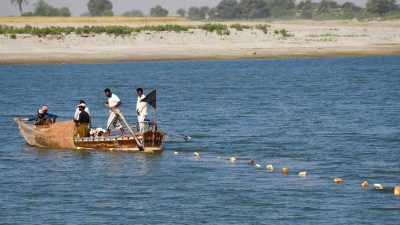
The Pakistan government has recently paused its ambitious canals project following widespread protests in Sindh. This initiative aimed to irrigate millions of acres of previously uncultivable land. However, it has sparked political unrest and revived old rivalries between provinces. The project is a key component of the $3.3 billion Green Pakistan Initiative, launched in 2023 to modernise agriculture and enhance food security.
Green Pakistan Initiative
The Green Pakistan Initiative was introduced by Prime Minister Shebaz Sharif and army chief General Asim Munir. It aims to transform the agricultural sector through modern technologies and improved irrigation infrastructure. The initiative seeks to increase crop yields and expand cultivation areas, addressing food shortages exacerbated by climate change.
Strategic Canals and Their Significance
In July 2024, six strategic canals were approved, with the Cholistan Canal being the most . This 176-km canal is intended to irrigate arid lands in southern Punjab. The project is expected to cost approximately $800 million and aims to convert 5,000 sq km of land into productive agricultural space. However, concerns about water supply and environmental impact have arisen.
Water Supply Challenges
The Cholistan Canal is designed to utilise flood water from India’s Sutlej River. However, historical data indicates that Pakistan’s water supply from eastern rivers is minimal. Critics argue that relying solely on the Sutlej is impractical, as the Indus River system is already under severe stress. This raises concerns about exacerbating water scarcity, particularly for Sindh, a lower riparian province.
Provincial Rivalries and Public Response
The canals project has ignited long-standing tensions between Punjab and Sindh. Many Sindhis view this initiative as a threat to their water resources and livelihoods. Protests erupted in Sindh, denoting fears that Punjab’s agricultural expansion could jeopardise Sindh’s water supply and ecological balance.
Political Implications for the PPP
The Pakistan Peoples Party (PPP), which governs Sindh, finds itself in a difficult position. Initially supportive of the canals project, the PPP faced backlash from its constituents. In response to the protests, the party has shifted its stance, emphasising the protection of Sindh’s water rights. The government has decided to halt the project temporarily, indicating a need for further deliberation.
Future Considerations
The future of the canals project remains uncertain. The government may reconsider the initiative with modifications to address Sindh’s concerns. The PPP’s response will be crucial in determining the project’s fate and the stability of the ruling coalition. Public sentiment in Sindh continues to be wary, indicating that any future proposals will require careful negotiation and transparency.
Questions for UPSC:
- Critically analyse the impact of climate change on Pakistan’s agricultural sector and food security.
- Estimate the implications of inter-provincial water disputes on national unity in Pakistan.
- Point out the historical grievances of Sindh against Punjab in the context of water resource management.
- What are the potential environmental consequences of large-scale irrigation projects in water-stressed regions? Discuss with suitable examples.
Answer Hints:
1. Critically analyse the impact of climate change on Pakistan’s agricultural sector and food security.
- Climate change leads to erratic weather patterns, affecting crop yields and agricultural productivity.
- Increased frequency of droughts and floods disrupt farming cycles and lead to food shortages.
- Rising temperatures contribute to water scarcity, impacting irrigation and crop viability.
- Food security is threatened as reliance on imports increases due to local production failures.
- Farmers face challenges adapting to new climate realities, requiring investment in resilient agricultural practices.
2. Estimate the implications of inter-provincial water disputes on national unity in Pakistan.
- Water disputes exacerbate regional tensions, particularly between Punjab and Sindh, undermining national cohesion.
- Perceived inequities in water distribution encourage resentment and historical grievances, leading to protests.
- Conflicts over water resources can distract from broader national issues, weakening governance and political stability.
- Increased rivalry may encourage separatist sentiments among marginalized provinces, threatening national integrity.
- Effective water management solutions are essential for encouraging dialogue and cooperation among provinces.
3. Point out the historical grievances of Sindh against Punjab in the context of water resource management.
- Sindh has historically felt marginalized in water allocation, leading to perceptions of Punjab’s dominance.
- Past hydro projects in Punjab have often been implemented without considering Sindh’s water needs.
- Sindh’s dependency on the Indus River makes it vulnerable to upstream water diversion by Punjab.
- Water scarcity in Sindh has resulted in ecological degradation, threatening livelihoods and agriculture.
- Historical events, such as the 1991 Water Accord, have not fully addressed Sindh’s concerns, perpetuating grievances.
4. What are the potential environmental consequences of large-scale irrigation projects in water-stressed regions? Discuss with suitable examples.
- Large-scale irrigation can lead to reduced river flow, harming aquatic ecosystems and biodiversity.
- Over-extraction of water may result in salinization of soil, reducing agricultural productivity over time.
- Increased water usage can exacerbate existing water scarcity, affecting local communities and agriculture.
- Environmental degradation may occur, including habitat loss and increased vulnerability to climate impacts.
- Examples include the Indus River’s ecological decline due to extensive irrigation projects in Punjab, threatening the Indus delta.