
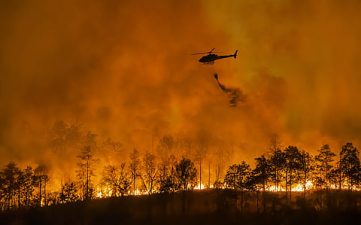
Recent studies highlight the growing overlap of fire seasons in eastern Australia and western North America, driven by climate change. This phenomenon poses challenges for resource sharing during wildfire emergencies. Researchers from Australia and the Helmholtz Centre for Environmental Research have documented this trend, noting that fire seasons are extending and increasingly coinciding.
Impact of Climate Change on Fire Seasons
Climate change is lengthening fire seasons in both regions. This extension leads to a greater overlap, which can strain resources shared between countries. The study indicates that by 2050, the overlap could increase by 4 to 29 days annually. Currently, the overlap has been one day per year since 1979.
Historical Context of Fire Seasons
Fire seasons in eastern Australia and western North America traditionally occurred at different times. In North America, the season runs from June to October. In Australia, it spans from October to March. This timing allowed for resource sharing during emergencies. However, climate change is disrupting this pattern.
Recent Wildfire Events
Significant wildfires have struck both regions in recent years. The January 2025 wildfire in Los Angeles resulted in the destruction of over 10,000 buildings and 29 fatalities. Similarly, Australia faced devastating bushfires from September 2019 to March 2020, burning over 12 million hectares. These events tell the critical need for coordinated firefighting efforts.
Role of El Niño and La Niña
The variability of the El Niño Southern Oscillation influences fire weather conditions. El Niño can lead to higher sea surface temperatures, causing droughts and heatwaves. In contrast, La Niña typically brings wetter conditions to western North America. Despite their opposing effects, both can contribute to overlapping fire seasons during strong weather events.
Challenges for International Cooperation
The increasing overlap of fire seasons complicates international cooperation in firefighting. Countries like Canada, the US, and Australia have relied on shared resources during crises. However, as seasons converge, the ability to coordinate efforts diminishes. Researchers recommend strengthening domestic firefighting capacities to reduce dependency on international support.
Future Projections and Recommendations
The study forecasts a continuing trend of overlapping fire seasons. Researchers suggest that nations must adapt to these changes by enhancing their local firefighting capabilities. This proactive approach will help mitigate the impacts of wildfires and improve response times during emergencies.
Questions for UPSC:
- Critically discuss the impact of climate change on global wildfire patterns.
- Examine the role of the El Niño Southern Oscillation in influencing weather conditions and its implications for agriculture.
- Analyse the importance of international cooperation in disaster management and the challenges posed by climate change.
- Point out the measures that can be taken to enhance domestic firefighting capacities in response to climate change.
Answer Hints:
1. Critically discuss the impact of climate change on global wildfire patterns.
- Climate change is leading to longer fire seasons globally, with increased frequency and intensity of wildfires.
- Regions like eastern Australia and western North America are experiencing overlapping fire seasons, complicating resource management.
- By 2050, projections suggest an increase in overlap of fire seasons by 4 to 29 days annually.
- Higher temperatures and prolonged drought conditions contribute to the severity of wildfires.
- Recent catastrophic wildfires demonstrate the urgent need for adaptive strategies in wildfire management.
2. Examine the role of the El Niño Southern Oscillation in influencing weather conditions and its implications for agriculture.
- El Niño causes warmer sea surface temperatures, leading to droughts and heatwaves in various regions, affecting agricultural productivity.
- La Niña typically results in wetter conditions, which can benefit certain crops but may also lead to flooding and crop damage.
- The oscillation’s variability influences fire weather, with implications for both wildfire incidence and agricultural conditions.
- About these patterns can help farmers adapt their practices to changing climate conditions.
- El Niño and La Niña events can disrupt seasonal weather patterns, impacting planting and harvesting schedules.
3. Analyse the importance of international cooperation in disaster management and the challenges posed by climate change.
- International cooperation allows for resource sharing, expertise exchange, and coordinated responses during disasters.
- Countries like Canada, the US, and Australia have historically collaborated in firefighting efforts, enhancing effectiveness.
- Climate change is causing fire seasons to overlap, complicating these cooperative efforts and resource availability.
- Challenges include increased demand on shared resources and the need for timely responses during concurrent emergencies.
- Strengthening domestic capacities is essential to reduce reliance on international support during disasters.
4. Point out the measures that can be taken to enhance domestic firefighting capacities in response to climate change.
- Investing in advanced firefighting technologies and equipment to improve response times and effectiveness.
- Training local firefighting personnel to handle increased wildfire incidents and emergencies.
- Developing strategic fire management plans that incorporate climate change projections and risk assessments.
- Enhancing community awareness and preparedness programs to mitigate fire risks at the local level.
- Promoting research and collaboration with international experts to adopt best practices in firefighting and resource management.