
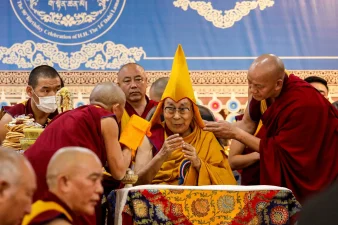
The 14th Dalai Lama has reaffirmed that the institution of the Dalai Lama will persist. This announcement came shortly before his 90th birthday. He stated that the Gaden Phodrang Trust will hold the sole authority to recognise future reincarnations. This declaration aligns with his previous statements regarding the future of the Dalai Lama lineage.
Significance of the Dalai Lama
The Dalai Lama is the spiritual leader of Tibetan Buddhism. He is revered for promoting peace, compassion, and human values. His teachings have transcended cultural boundaries, influencing many worldwide. The institution of the Dalai Lama is central to Tibetan identity and spirituality.
About the Gaden Phodrang Trust
The Gaden Phodrang Trust was established in 2011 in Dharamshala. It focuses on recognising the reincarnation of the Dalai Lama. The trust operates from the office of the Dalai Lama and is managed by Prof Samdhong Rinpoche. The trust’s formation puts stress on the importance of continuity in the Dalai Lama lineage.
History and Meaning of Gaden Phodrang
The term “Gaden Phodrang” refers to the Dalai Lama’s residential quarters at Drepung Monastery in Lhasa. This tradition dates back to the second Dalai Lama. Initially, the Dalai Lamas resided at Gaden Phodrang before moving to the Potala Palace and Norbulingka. The trust maintains this historical legacy.
Related Institutions
The Gaden Phodrang Trust is one of three key institutions associated with the Dalai Lama. The other two are the Dalai Lama Trust and the Gaden Phodrang Foundation. Each institution has distinct roles in promoting Tibetan culture and supporting humanitarian efforts.
Objectives of the Gaden Phodrang Foundation
The Gaden Phodrang Foundation is a Swiss non-profit aimed at maintaining the Dalai Lama’s traditions. It promotes human values, interfaith dialogue, and environmental protection. The foundation also supports educational initiatives and encourages understanding between science and Buddhism.
The Dalai Lama Trust’s Mission
Founded in 2009, the Dalai Lama Trust focuses on the welfare of the Tibetan people. It provides support for education and cultural preservation. The trust promotes secular ethics and compassion globally. It collaborates with various partners to achieve its objectives.
Future of the Dalai Lama Lineage
The Dalai Lama has confirmed that future Dalai Lamas will be recognised according to tradition. This ensures the continuity of Tibetan Buddhism’s spiritual leadership. The Gaden Phodrang Trust will oversee this process, maintaining the lineage’s integrity.
Global Impact of the Dalai Lama
The Dalai Lama’s teachings have a deep global impact. He advocates for peace, compassion, and understanding among religions. His influence extends beyond Tibet, inspiring individuals and communities worldwide to embrace these values.
Questions for UPSC:
- Critically analyse the role of the Dalai Lama in promoting interfaith harmony and peace globally.
- Explain the significance of the Gaden Phodrang Trust in the context of Tibetan Buddhism and its future.
- What are the objectives of the Gaden Phodrang Foundation? How does it support Tibetan culture and education?
- Comment on the impact of the Dalai Lama Trust on the welfare of the Tibetan people and its contributions to global ethics.
Answer Hints:
1. Critically analyse the role of the Dalai Lama in promoting interfaith harmony and peace globally.
- The Dalai Lama advocates for dialogue among different religions, emphasizing shared values.
- He promotes compassion and non-violence as universal principles applicable to all faiths.
- His teachings have inspired global movements for peace and understanding, transcending cultural boundaries.
- He engages in interfaith dialogues, encouraging respect and cooperation among diverse religious communities.
- His global influence is evident in his participation in international peace conferences and humanitarian initiatives.
2. Explain the significance of the Gaden Phodrang Trust in the context of Tibetan Buddhism and its future.
- The Gaden Phodrang Trust is responsible for recognizing future reincarnations of the Dalai Lama, ensuring continuity.
- It preserves the lineage and traditions of Tibetan Buddhism, vital for cultural identity.
- The trust operates under the authority of the Dalai Lama, reinforcing its legitimacy and spiritual significance.
- It plays important role in maintaining the institutional framework of Tibetan Buddhism post-1959 exile.
- The trust symbolizes the resilience of Tibetan culture and spirituality amidst challenges.
3. What are the objectives of the Gaden Phodrang Foundation? How does it support Tibetan culture and education?
- The foundation aims to uphold the traditions and teachings of the Dalai Lama.
- It promotes human values, interfaith dialogue, and environmental sustainability.
- The foundation supports educational initiatives that preserve Tibetan language and culture.
- It funds publications and translations to disseminate Buddhist philosophy and science.
- It assists various humanitarian efforts, extending its support to all communities in need.
4. Comment on the impact of the Dalai Lama Trust on the welfare of the Tibetan people and its contributions to global ethics.
- The Dalai Lama Trust focuses on educational support for Tibetan students, preserving culture and language.
- It promotes human values and interfaith harmony, contributing to global ethical discussions.
- The trust collaborates with international partners to enhance the welfare of the Tibetan community.
- It supports initiatives that encourage secular ethics and compassion, impacting broader societal norms.
- The trust exemplifies the Dalai Lama’s commitment to global peace and the welfare of marginalized communities.