
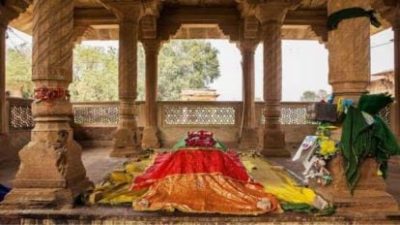
The Madhya Pradesh High Court recently ruled against a petition to allow religious activities at the tomb of Sufi saint Hazrat Sheikh Muhammad Ghaus in Gwalior. This site is historically and protected under Indian law. The court’s decision reflects a commitment to preserving the integrity of the monument, which also houses the grave of Tansen, a renowned musician from Emperor Akbar’s court.
Historical Significance of the Tomb
The tomb of Hazrat Sheikh Muhammad Ghaus was constructed after his death in 1563. It is an important example of Mughal architecture and is listed as a Centrally Protected Monument under the Ancient Monuments and Archaeological Sites and Remains Act, 1958. The Archaeological Survey of India (ASI) has maintained it since 1962. The structure features a large dome, intricate stone screens, and chhatris, showcasing architectural trends that influenced later Mughal monuments.
Litigation History
The ownership and control of the tomb have been contested in multiple legal cases over the years. The recent petition was filed by Syed Sabla Hasan, who claimed to be the spiritual caretaker and legal heir of the saint. He sought permission for traditional religious practices, including the annual Urs gathering. However, the ASI argued against this, stating that such activities could jeopardise the monument’s preservation.
Arguments in Court
The ASI presented evidence of unlawful activities occurring at the site, such as installation of electrical wiring and tents. These actions were seen as threats to the monument’s structural integrity and cultural significance. The court sided with the ASI, asserting that religious events could not be conducted at a Centrally Protected Monument.
Previous Legal Challenges
The court noted that similar claims had been litigated multiple times, with no legal rights established by the petitioner or his family. Past cases include a civil suit filed in 1995, which was dismissed, and subsequent appeals that were also rejected. The legal battles illustrate a long-standing resolution in favour of ASI’s authority over the monument.
Cultural Impact
The tomb of Hazrat Sheikh Muhammad Ghaus, alongside Tansen’s grave, has cultural resonance. It attracts both pilgrims and music enthusiasts, showcasing the intersection of spirituality and the arts in Indian history. The court’s decision aims to maintain this cultural heritage without compromising the monument’s integrity.
Current Status and Future Implications
The High Court’s ruling reinforces the ASI’s role in protecting India’s historical monuments. It sets a precedent for future cases involving religious practices at protected sites. The ongoing preservation efforts reflect a broader commitment to safeguarding India’s rich architectural and cultural heritage.
Questions for UPSC:
- Examine the role of the Archaeological Survey of India in preserving India’s cultural heritage.
- Discuss in the light of historical monuments, the balance between religious practices and preservation efforts.
- Critically discuss the impact of Mughal architecture on contemporary Indian architectural styles.
- With suitable examples, analyse the significance of Sufi traditions in the cultural landscape of India.
Answer Hints:
1. Examine the role of the Archaeological Survey of India in preserving India’s cultural heritage.
- The ASI was established in 1861 to protect and preserve ancient monuments and archaeological sites.
- It manages over 3,600 protected monuments, ensuring their maintenance and conservation.
- It conducts archaeological research, documentation, and public awareness campaigns about heritage.
- The ASI plays important role in legal matters concerning heritage sites, defending against unauthorized activities.
- Its efforts contribute to national identity and tourism, promoting India’s rich history and culture.
2. Discuss in the light of historical monuments, the balance between religious practices and preservation efforts.
- Historical monuments often hold religious significance, attracting worshippers and cultural events.
- Preservation efforts prioritize structural integrity and historical accuracy over religious activities.
- Legal frameworks, like the Ancient Monuments Act, restrict activities that could harm monuments.
- Balancing both requires dialogue between religious communities and preservation authorities.
- Successful examples include designated areas for worship near but not within protected sites.
3. Critically discuss the impact of Mughal architecture on contemporary Indian architectural styles.
- Mughal architecture introduced features like domes, arches, and intricate inlay work, influencing modern designs.
- Contemporary architecture often merges Mughal elements with modern materials and techniques.
- Public buildings, parks, and institutions reflect Mughal aesthetics, promoting cultural heritage.
- The emphasis on symmetry and gardens in Mughal design is echoed in modern landscaping.
- Architectural education in India often includes Mughal styles, ensuring their relevance in contemporary practices.
4. With suitable examples, analyse the significance of Sufi traditions in the cultural landscape of India.
- Sufi traditions emphasize love, tolerance, and spiritual connection, shaping India’s pluralistic society.
- Festivals like Urs celebrate Sufi saints, encouraging community bonding across religions.
- Music, particularly Qawwali, is cultural expression linked to Sufi practices, enhancing India’s musical diversity.
- Sufi shrines serve as pilgrimage sites, contributing to local economies and cultural tourism.
- Notable examples include the Dargah of Khwaja Moinuddin Chishti in Ajmer, symbolizing Sufi influence on Indian spirituality.