
Economic freedom lies at the core of human dignity — the ability to choose one’s work, enjoy the fruits of labour, own property, and participate meaningfully in markets. While India’s economy continues to grow in size, deeper questions are emerging about who actually enjoys this freedom. Rising GDP figures mask widening inequalities, revealing an economy where prosperity and choice are increasingly concentrated among a privileged few.
Why GDP growth does not guarantee freedom
A widespread assumption equates higher GDP with better living conditions. Yet GDP measures only the value of goods and services exchanged in markets. It does not account for income inequality, environmental degradation, health, education, or the quality of life — nor does it reflect how evenly economic freedom is distributed.
True prosperity depends not merely on economic size, but on whether individuals possess the freedom to work, earn, save, and spend beyond basic survival.
Measuring economic freedom: where India stands
Economic freedom is assessed globally through indices that evaluate property rights, regulatory efficiency, market openness, and government intervention. The Index of Economic Freedom, published annually since 1995 by the , presents a sobering picture.
In the 2025 Index, India ranked 128th out of 176 countries, scoring 53 out of 100 and classified as “mostly unfree”. This status has remained unchanged since 2002, following an earlier phase when India was labelled “repressed”. The report highlights a troubling pattern: while wealth and power concentrate at the top, the economic freedom of the middle class continues to shrink.
Consumption-driven growth and the rise of ‘India1’
India’s growth model is predominantly consumption-driven, with private consumption accounting for around 60% of GDP. However, this consumption is highly skewed. The top 10% of the population accounts for nearly two-thirds of discretionary spending on non-essential goods.
The Indus Valley Report 2025 by Blume Ventures describes this group as “India1” — the engine of the Indian consumer economy. This segment, numbering about 14 crore people, effectively constitutes a high-income country within India:
- India1 alone would rank as the world’s 10th most populous country.
- Its per capita income would place it around 63rd globally, compared to India’s overall rank near 140, based on data.
Crucially, this group is not expanding rapidly in size, but deepening in wealth and consumption power.
How elite consumption reshapes markets and cities
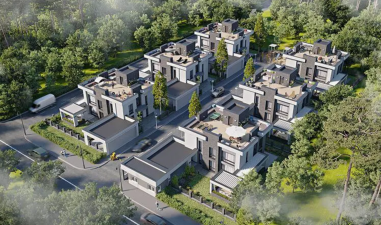
Market trends increasingly reflect the preferences of India1 — from luxury housing and gated communities to premium travel, destination weddings, and high-end automobiles. These “islands of affluence” offer security and exclusivity, often described as spaces where residents pay a premium for insulation from the realities of wider India.
Currently, around 16 million gated households account for 32% of the population in 50 major cities, yet contribute nearly 45% of urban consumption. Their influence shapes:
- The boom in luxury real estate, projected to push India’s property market towards a $1 trillion valuation by 2030.
- A doubling of high-end and ultra-luxury housing share over the past five years.
- Rising sales of premium cars even as mass-market vehicle growth stagnates.
- A sharp increase in foreign travel spending within outward remittances.
Inequality, market concentration, and shrinking choice
While elite consumption energises certain sectors, it also distorts the economy. Corporates increasingly prioritise high-margin luxury goods, diverting innovation and resources away from affordable, quality products for the majority.
This trend strengthens monopolistic tendencies, allowing large firms to exercise coercive market power over both consumers and workers. Economic freedom, in such conditions, becomes the privilege of capital rather than a right enjoyed by individuals.
The bottom 90% and the erosion of everyday freedom
For nearly one billion Indians, economic life is defined by constraint rather than choice. After meeting basic needs — food, housing, healthcare, education — there is little or nothing left for discretionary spending. Savings are minimal, and luxury remains aspirational rather than attainable.
Key pressures include:
- Weak job creation and limited quality employment options.
- Real wage stagnation as inflation outpaces income growth.
- Rising costs of essential services.
This is not merely a problem of poverty, but of shrinking economic space for the vast majority of citizens.
Freedom as a policy choice, not an accident
The imbalance in economic freedom is not inevitable. It reflects choices embedded in policies, regulations, and institutional priorities. When markets privilege profit concentration over competition, and growth over inclusion, freedom expands for a few while contracting for many.
As the Indus Valley Annual Report cautions, when a billion citizens are excluded from the non-essential economy, the ripple effects will weaken industry, innovation, and long-term growth.
What to note for Prelims?
- Index of Economic Freedom published by the Heritage Foundation.
- India ranked 128/176 in 2025; status: “mostly unfree”.
- Top 10% accounts for ~66% of discretionary consumption.
- Concept of “India1” from Indus Valley Report 2025.
What to note for Mains?
- Difference between GDP growth and economic freedom.
- Link between inequality, consumption patterns, and market power.
- Impact of luxury-led growth on inclusiveness and competition.
- Policy reforms needed to expand economic freedom and break poverty traps.