
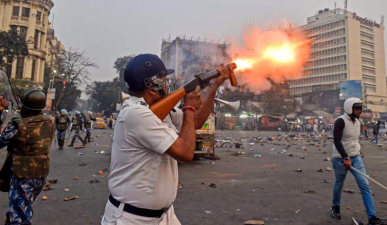
The Rajasthan government’s proposal to introduce a law allowing certain localities to be declared “disturbed areas” has reopened a long-running constitutional debate. At its heart lies a difficult question: how far can the state go in regulating private property transactions in the name of communal harmony without violating fundamental rights? The proposed Rajasthan Bill closely resembles a law that has existed in Gujarat since 1991, whose operation has repeatedly been scrutinised and curtailed by the judiciary.
Why Rajasthan’s proposal has triggered controversy
Rajasthan’s Law Minister has justified the proposed Bill as a preventive measure against “demographic imbalance” and “improper clustering” of communities. Though the draft is not yet public, this language has immediately drawn parallels with the Gujarat Disturbed Areas framework. Civil liberties groups argue that such phrasing risks turning a law meant to protect vulnerable sellers into a tool for regulating who may live where, based on community identity.
The concern is sharpened by experience: Gujarat’s law has been in force for over three decades, but its scope has been repeatedly narrowed by court intervention due to executive overreach.
Origins and intent of the Gujarat Disturbed Areas Act
The Gujarat Prohibition of Transfer of Immovable Property and Provision for Protection of Tenants from Eviction from Premises in Disturbed Areas Act, 1991 was enacted after a series of communal riots. Its original objective was limited and specific: to prevent “distress sales” of property during periods of communal violence.
Under the Act:
- The state government may notify an area as “disturbed” based on a history of communal unrest.
- Any transfer of immovable property in such an area requires prior approval from the district collector.
- A sale without such sanction is void in law.
- The collector must verify that the transaction reflects free consent and fair market value.
The protective logic was straightforward — to ensure that fear, intimidation, or panic did not force owners to sell property cheaply and permanently alter neighbourhoods during violence.
From protection to policing demographics
Over time, critics argue, the Act’s implementation has drifted from its original purpose. By requiring state approval for property transfers, the law effectively allows authorities to influence the demographic composition of localities.
Legal scholars have consistently pointed out the tension this creates with:
- The freedom to reside and settle in any part of India.
- The constitutional bar on discrimination based on religion or community.
This tension became explicit with the 2020 amendment to the Gujarat Act, which introduced vague concepts such as “proper clustering”, “demographic equilibrium”, and “polarisation”. These terms expanded the collector’s discretion well beyond checking consent and price.
Judicial pushback and pending challenges
The constitutional validity of the Gujarat law itself is currently under challenge before the , with major petitions filed in 2021 and 2022. While the court has declined to stay the entire Act, it decisively intervened against the 2020 amendment.
In January 2021, the High Court stayed the operation of provisions that allowed the state to judge “demographic imbalance” or “proper clustering”. This interim stay continues, effectively blocking the state from using these broader powers. The decision was briefly carried to the Supreme Court of India, which declined interim interference and asked for early disposal by the High Court.
Notably, Rajasthan’s stated rationale mirrors the very language that remains stayed in Gujarat, raising questions about the likely constitutional trajectory of the proposed law.
How courts have confined the collector’s powers
Despite the Act stating that the collector’s decision is “final” and “shall not be questioned in any Court”, judicial review under constitutional law has remained robust. Through repeated rulings, the Gujarat High Court has laid down a clear principle: the collector’s inquiry is narrowly confined.
Across multiple cases (2020, 2023, and as recently as 2025), the court has held that:
- The sole inquiry is whether the sale is voluntary and at fair market value.
- Police reports citing “law and order” concerns are irrelevant if consent and value are established.
- Neighbours have no legal standing to object to a private sale.
- Community strength or religious identity of buyers cannot be a ground to deny permission.
In one notable Vadodara case, the court quashed a refusal based on anticipated unrest, stating that such considerations were “completely out of context” with the Act’s purpose.
Broader implications for governance and rights
The Gujarat experience illustrates a deeper constitutional dilemma. Laws framed as protective measures can, if loosely worded and expansively interpreted, become instruments of social control. Judicial intervention has prevented the Disturbed Areas Act from morphing into a mechanism for demographic engineering, but only after years of litigation and uncertainty for citizens.
For Rajasthan, the lesson is clear: vague terms like “improper clustering” invite constitutional challenge and judicial narrowing. The balance between public order and individual liberty is not merely political — it is a legal boundary carefully policed by the courts.
What to note for Prelims?
- Gujarat Disturbed Areas Act, 1991: Objective to prevent distress sales during communal unrest.
- Collector’s role limited to checking free consent and fair market value.
- 2020 Gujarat amendment introducing “demographic equilibrium” stayed by Gujarat High Court.
- Judicial review under Article 226 overrides statutory finality clauses.
What to note for Mains?
- Tension between state regulation of property and fundamental rights.
- Judicial interpretation as a check on executive discretion.
- Risks of vague legislative language in sensitive socio-communal contexts.
- Relevance of Gujarat precedents for evaluating Rajasthan’s proposed Bill.