
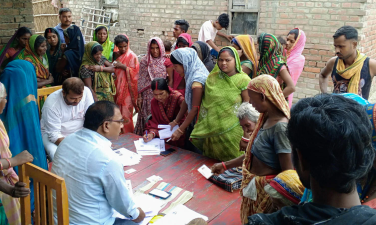
The ongoing Special Intensive Revision (SIR) 2.0 of electoral rolls was envisaged as a technology-led exercise to ensure inclusion and accuracy. Instead, it has generated widespread anxiety among voters and raised serious questions about institutional capacity, accountability, and democratic trust. The controversy goes beyond administrative glitches; it speaks directly to how the State balances efficiency with dignity in the exercise of a fundamental democratic right.
What SIR 2.0 set out to achieve
SIR 2.0 was projected by the as a modern, transparent clean-up of electoral rolls, using its digital platform, . The stated objectives were straightforward: remove duplicate or ineligible entries, correct legacy errors, and ensure that every eligible Indian resident is included in the voter list. In principle, this aligns with the Commission’s constitutional mandate to prevent both wrongful inclusion and wrongful exclusion.
The gap between digital capacity and ground execution
Despite ECINet’s ability to support data entry, verification, cross-checks, and audit trails, implementation on the ground has relied heavily on paper forms, physical summons, and in-person hearings. This dependence on manual processes has produced outcomes that appear disproportionate and, at times, absurd. Eminent citizens — including a Nobel laureate and Bharat Ratna awardee in his nineties, former police commissioners, MPs, DGPs, vice chancellors, and senior civil servants — have reportedly been summoned to prove their identity or residence. These are individuals with decades of documented public presence, yet they are being subjected to procedures designed for uncertainty, not established citizenship.
Legacy roll defects and the “non-mapped” problem
A core structural issue lies in the continued reliance on flawed electoral rolls from the 2002–04 SIR, which were prepared through pen-and-paper methods and lacked robust third-party verification. Voters missing from those legacy lists are now being flagged as “non-mapped”, regardless of their continuous participation in elections since then. This has led to several crores of voters nationwide being pushed into a category that effectively presumes doubt, shifting the burden of proof from the institution to the citizen.
In Uttar Pradesh alone, over ten million voters — nearly 8% of Enumeration Forms — were marked non-mapped. Such figures indicate not isolated errors, but systemic data inconsistencies inherited and amplified by SIR 2.0.
Deletion fears and data inconsistencies
Draft electoral rolls released across 12 States and Union Territories have triggered alarm over the alleged deletion of genuine voters — estimated at nearly 65 million nationwide when compared with the 2024 final rolls. In Uttar Pradesh, submissions before the revealed a striking anomaly: the SIR draft roll lists 12.56 crore voters, while Panchayat SIR data records 12.69 crore voters in rural areas alone. Such implausible outcomes underline the risks of manual correction layered over defective databases, instead of systematic digital reconciliation.
Procedural indignity and institutional accountability
The hearings triggered for non-mapped voters are often conducted at short notice and with limited organisation, imposing real hardship on elderly citizens, veterans, and retired professionals. A particularly sensitive case involves monks from the Ramakrishna Math and Mission, whose biological parents’ names — relinquished upon embracing monastic life — do not match the names of their spiritual gurus now listed as parents. Though they do not vote, consistent with the order’s apolitical principles, they seek inclusion in rolls to avoid administrative and visa-related complications. Subjecting such individuals to coercive verification processes raises ethical concerns about respect, proportionality, and institutional sensitivity.
Legal risk and the Form 6 paradox
An especially troubling aspect is the use of Form 6 — meant for first-time voters — as the only route for restoring names accidentally deleted due to institutional error. This forces long-standing voters to make factually incorrect declarations that they have never been enrolled before. In doing so, they risk exposure to criminal liability under the . The effect is a reversal of accountability, where citizens bear legal risk for failures originating within the system itself.
Why a digital-first correction is essential
The remedy does not lie in multiplying physical hearings, but in fully deploying the digital infrastructure that already exists. A digital-first workflow — based on online document uploads, backend verification, and automated cross-checks — can make voter verification faster, fairer, and more humane. Applicants should receive real-time status updates on their Enumeration Forms via SMS, email, or EPIC-linked accounts. Where discrepancies arise, documents can be uploaded through ECINet and verified automatically through backend interfaces, with acknowledgements at each stage. For those less digitally comfortable, BLOs and nearby electoral offices can provide assisted access, without reverting to coercive hearings.
What this episode means for democratic trust
SIR 2.0 has crystallised a deeper question: is electoral reform being pursued with trust and inclusion at its core, or through suspicion and procedural coercion? The distress witnessed so far reflects not a lack of technology, but choices in enforcement. Institutions tasked with safeguarding democracy must avoid turning verification into intimidation. Electoral integrity is strengthened not merely by purging errors, but by ensuring that no eligible citizen feels alienated or humiliated in the process.
What to note for Prelims?
- Role and constitutional mandate of the Election Commission of India.
- Purpose and features of Special Intensive Revision (SIR) of electoral rolls.
- ECINet as the ECI’s digital platform for electoral management.
- Concept of “non-mapped” voters and legacy roll errors.
- Form 6 and its intended use.
What to note for Mains?
- Challenges of electoral roll revision in a large democracy.
- Digital governance versus ground-level implementation gaps.
- Institutional accountability and burden of proof in citizen–State relations.
- Ethical and legal implications of voter exclusion and procedural coercion.
- Reforms needed to balance electoral integrity with voter dignity.