
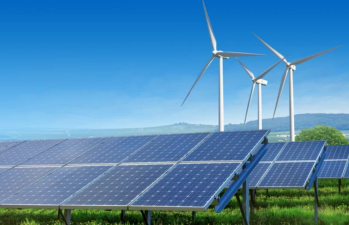
India’s clean energy transition has entered a decisive phase. With more than 45 GW of clean energy capacity added in 2025 and the emergence of round-the-clock renewable energy tenders — including by Indian Railways — the country is moving beyond episodic renewables towards dispatchable, firm green power. This shift coincides with a global search for energy security through clean technologies, opening a strategic window for India not only to deploy but also to manufacture for domestic and global markets.
From Deployment Hub to Manufacturing Powerhouse
So far, India’s clean energy story has been strongest on deployment. Large-scale solar and wind installations, rapid electrification of transport, and ambitious hydrogen plans have positioned India as a major consumer of clean technologies. The next leap, however, lies in building a fully integrated clean technology manufacturing ecosystem — spanning components, systems, testing, and product development.
Manufacturing at scale is not just about capacity. It requires regulatory certainty, predictable demand, and a business environment that attracts top-tier global collaborations. Ease of Doing Business (EODB) reforms therefore become as critical as industrial policy incentives.
Why Ease of Doing Business Matters for Cleantech
Clean technology manufacturing is capital-intensive, innovation-driven, and globally competitive. Delays in land acquisition, licensing, dispute resolution, or customs clearance directly affect cost competitiveness and time-to-market.
In 2020, independent assessments showed that registering a business in India took about 68 days and cost nearly 7.4% of the registered property’s value — significantly higher than many high-income Organisation for Economic Co-operation and Development countries. Commercial dispute resolution averaged 1,445 days, nearly three times the OECD norm. Such frictions were structural deterrents to startups and foreign direct investment.
Reforms That Shifted the Trajectory
Recognising these constraints, India undertook a series of systemic reforms:
- Jan Vishwas-style compliance rationalisation and decriminalisation of minor offences
- GST simplification and logistics reforms
- Single-window clearances and faster electricity connections
- Time-bound insolvency resolution under the (2016)
These measures helped India jump 79 places to rank 63rd in the global EODB rankings by 2019. While the index itself has since been discontinued, the reform momentum remains relevant — especially for manufacturing-intensive sectors like cleantech.
Global Market Openings for Indian Cleantech
Geopolitical shifts are reinforcing this opportunity. With the US withdrawing from the again and South–South cooperation deepening, demand for affordable, reliable clean technologies in the Global South is set to grow.
Countries such as South Africa, Kenya, Chile, and Vietnam are scaling renewables, electric mobility, and green hydrogen. These markets need high-quality components at competitive prices — a space where Indian manufacturers can emerge as trusted suppliers. Parallel opportunities are opening in developed markets such as South Korea, Japan, the UK, Australia, and potentially the EU as trade agreements are finalised.
State-Level Competition and Industrial Clusters
Indian states are already positioning themselves. Andhra Pradesh, Odisha, Gujarat, and Uttar Pradesh are offering tailored packages that combine:
- Capital subsidies (in some cases up to 40%)
- Concessional land and infrastructure
- Single-window approvals
- Policy-linked incentives for green hydrogen and storage
These initiatives can seed manufacturing clusters, but their success depends on complementary EODB reforms that reduce regulatory friction as firms scale across states.
Creating Long-Term Demand Certainty
Manufacturers invest when demand signals are clear and durable. India can strengthen this by committing to ambitious, credible trajectories:
- 1,500 GW of solar and wind capacity by 2040
- 80% of new vehicle sales as EVs, with full electrification of freight and public transport
- Advancing the ’s projected 2,380 GWh of energy storage requirement to well before 2047
Such commitments would drive innovation while justifying investments in domestic manufacturing, testing, and certification ecosystems.
Reducing Friction Across the Manufacturing Lifecycle
For Indian cleantech to compete globally, EODB reforms must go beyond entry-level approvals. Priorities include:
- Harmonising regulations across states to enable seamless scaling
- Clarifying inter-departmental jurisdictions to avoid approval overlaps
- Co-locating manufacturing clusters with testing and certification bodies
- Securing supply chains for critical minerals and components
This would shorten time-to-market and ensure products meet global quality and life-cycle emission standards, especially in sectors like EVs, steel, and cement.
Dynamic Reform as a Competitive Advantage
Ease of Doing Business cannot be a one-time reform. It must be dynamic and iterative, based on continuous feedback from manufacturers and investors. Regular engagement helps identify new bottlenecks as technologies evolve and markets shift.
As global green finance expands, countries that combine scale, reliability, and regulatory efficiency will dominate clean energy supply chains. With calibrated EODB reforms aligned to industrial ambition, India can move decisively from being a large clean energy market to a global manufacturing and innovation hub.
What to Note for Prelims?
- Concept of round-the-clock renewable energy
- Role of EODB reforms in manufacturing
- Insolvency and Bankruptcy Code (2016)
- CEA projections on energy storage
What to Note for Mains?
- Link between clean energy transition and industrial policy
- Importance of EODB for attracting cleantech FDI
- India’s role in Global South clean energy supply chains
- Need for dynamic regulatory reforms to support manufacturing