
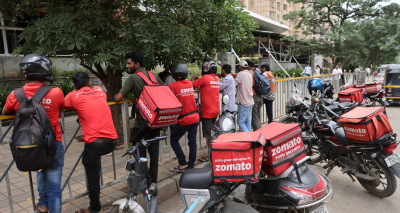
A planned nationwide strike by platform and gig workers on New Year’s Eve has once again pushed a fundamental legal and policy question into the spotlight: how should the relationship between digital platforms and their workers be understood? This is not a marginal dispute about terminology. It goes to the heart of labour regulation, worker protection, and the future of work in India’s rapidly digitising economy.
Why the Employment Question Matters
Labour laws across the world are built on a core assumption: employers and workers do not bargain from positions of equal power. Those who own capital and control work processes can dictate terms, while workers depend on wages for survival. If such relationships were governed purely by private contracts, workers would routinely face exploitation.
To correct this imbalance, the State intervenes through labour laws—by recognising employment relationships, enabling collective bargaining, and guaranteeing enforceable rights such as minimum wages, protection against arbitrary dismissal, overtime pay, and social security. These protections are not acts of charity; they are the result of centuries of struggle and legal evolution.
Employment Versus Contractual Services
Not every service relationship attracts labour law protections. Where a person genuinely provides an independent service—such as an artist commissioned for a painting—the law of contracts applies. Both parties are assumed to have comparable bargaining power and freedom to negotiate terms.
Employment, however, is defined not by labels but by control. When one party controls how work is organised, priced, monitored, and terminated, the relationship moves from a contract for service to a contract of service. This distinction is crucial to the platform economy debate.
The Platform Model and the Language of Evasion
Platform companies such as , , and describe their workers as “delivery partners” or “driver-partners”, not employees. The terminology is deliberate. If workers are treated as independent contractors, labour laws can be sidestepped.
Yet the reality of platform work tells a different story. Through algorithms embedded in apps, platforms:
- Set remuneration and incentive structures unilaterally
- Control access to work and allocate tasks
- Monitor performance through ratings and surveillance
- Impose penalties and deactivate workers without transparent processes
This level of control closely mirrors traditional employment—only now exercised digitally and opaquely.
The Myth of Flexibility
Platforms argue that workers are free to log in and log out at will, making the relationship episodic rather than continuous. While this flexibility exists in form, labour law has long recognised that economic necessity often makes such freedom illusory.
In theory, any worker can leave an employer. In practice, limited alternatives, debt, and household responsibilities bind workers to precarious arrangements. For most delivery partners and drivers, platform work is not a side hustle but a primary livelihood. Flexibility does not erase dependency, nor does it neutralise power asymmetry.
Global Judicial Trends on Platform Work
Courts across jurisdictions have increasingly looked beyond contractual labels to examine substance. Judicial bodies in Europe and Latin America have recognised that platform workers perform labour under conditions of control that warrant labour law protection.
Most notably, the Supreme Court of the United Kingdom ruled that Uber drivers are “workers” entitled to minimum wages and other protections. Academic research globally reinforces this position: flexibility in scheduling does not negate employer control or the need for regulation.
India’s Legal Lag
Indian law has yet to fully respond to this transformation of work. The new labour codes acknowledge platform and gig workers, but largely confine protections to limited social security measures. They stop short of recognising platform workers as employees entitled to comprehensive labour rights.
Some states have experimented with welfare schemes, but these remain fragmented and discretionary. Crucially, they do not address core issues such as wage determination, unfair termination, and collective bargaining.
Beyond Charity and Consumer Sympathy
Suggestions that platform worker distress can be addressed through tips, goodwill, or corporate benevolence fundamentally misunderstand the issue. Informal generosity cannot substitute for enforceable legal rights. Without statutory protection, workers remain vulnerable to unilateral algorithmic decisions that affect their income and livelihood.
The New Year’s Eve strike underscored this gap between economic reality and legal recognition. It was not merely a protest for better pay, but a demand for legal visibility and dignity.
What to Note for Prelims?
- Difference between employment and contractual service
- Key features of platform or gig work
- Provisions for gig workers in India’s new labour codes
- UK Supreme Court ruling on Uber drivers
What to Note for Mains?
- Power asymmetry in platform-based work arrangements
- Limits of contractual freedom in labour regulation
- Comparative global approaches to gig worker rights
- Need for legal recognition and regulation of digital labour platforms