
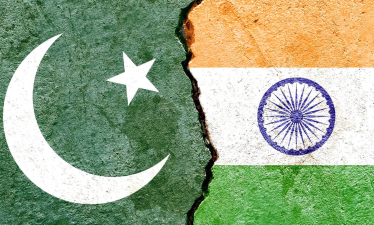
For more than two decades, India–Pakistan relations have been trapped in a grimly repetitive cycle. Diplomatic outreach is followed by cautious optimism, which is then shattered by a terrorist attack traced back to actors operating from Pakistani soil. Each rupture hardens mistrust further, until dialogue itself comes to be seen not as a tool of statecraft, but as a liability. This pattern has now solidified into policy — and yet, the costs of permanent disengagement are becoming increasingly apparent.
A history that explains India’s reluctance
India’s unwillingness to re-engage diplomatically with Pakistan is not ideological but experiential. The Kargil conflict followed the Lahore Declaration. The Mumbai attacks of 26/11 came after backchannel breakthroughs and confidence-building efforts. The Pathankot airbase attack occurred weeks after Prime Minister Narendra Modi made an unprecedented stopover in Lahore to meet Nawaz Sharif.
Over time, this sequence has produced a hard conclusion within the Indian establishment: dialogue without accountability is not diplomacy, but strategic self-harm. Civilian actors in Pakistan — journalists, academics, retired diplomats — have repeatedly expressed goodwill, but have been unable to demonstrate the institutional capacity to prevent the recurrence of violence. This has entrenched New Delhi’s position that dismantling the infrastructure of terrorism must precede any meaningful talks.
Why “no dialogue” is not a strategy
Yet, a policy of silence cannot be a permanent solution. In a volatile region like South Asia, disengagement does not freeze tensions; it allows them to accumulate. The absence of communication channels raises the risk of miscalculation, especially in an era of social media amplification and hyper-nationalist politics.
A terrorist incident, an inflammatory statement, or a political provocation can escalate rapidly — not necessarily because either side seeks conflict, but because there are no stabilising mechanisms to contain it. Strategic stasis, in this sense, is not neutral; it is dangerous.
The limits of summit-centric diplomacy
One lesson from past failures is that summit-level engagement, heavily invested with political symbolism, is uniquely vulnerable to sabotage. High-profile dialogue creates incentives for spoilers who seek to derail peace through violence.
What is needed is a shift away from headline diplomacy towards a layered and resilient architecture of engagement — one that does not collapse entirely when official talks stall. Such an approach recognises that diplomacy is not an event, but a process sustained across multiple channels.
The case for people-to-people engagement
In the long run, the most durable deterrent to hostility may not lie in coercion or isolation, but in the slow accumulation of human relationships that resist the logic of enmity. Carefully calibrated people-to-people engagement offers such a possibility.
Low-risk sectors provide obvious entry points:
- Cultural and sporting exchanges
- Academic and journalistic interactions under monitored frameworks
- Medical visas and humanitarian access
- Religious pilgrimages
These interactions are not naïve gestures. They function as pressure valves, allowing contact even when political relations are frozen. They also help expand the constituency for peace within Pakistan — a constituency that is often marginalised, but far from insignificant.
Why engagement is not endorsement
A common objection to such outreach is that it rewards Pakistan without extracting accountability for terrorism. This conflates engagement with approval. Engagement, in fact, is investment — in shaping future conditions where dialogue becomes sustainable rather than episodic.
India can maintain its core red line on terrorism while simultaneously exploring forms of contact that do not compromise security. These are not contradictory goals. They reflect strategic maturity.
From binary to incremental diplomacy
India–Pakistan relations have too often been framed in binary terms: talk or don’t talk. A more realistic approach is incremental diplomacy — calibrated engagement that responds to changes on the ground.
Clear benchmarks can be articulated:
- Visible action against designated terror outfits
- Arrests or prosecution of specific individuals
- Restrictions on public mobilisation by proscribed organisations
Partial compliance need not trigger grand summits, but could justify modest reciprocal steps — resuming Track II dialogues, restoring sporting ties, or reopening limited consular channels. This creates a dynamic of conditionality rather than deadlock.
The role of regional and functional cooperation
Traditional regional platforms such as South Asian Association for Regional Cooperation have been paralysed by bilateral tensions. However, functional cooperation in areas such as climate adaptation, disaster relief, public health or Indus waters management offers neutral, humanitarian ground.
These domains are not politically neutral, but they are existentially necessary. Cooperation here can proceed without resolving larger disputes, while still building habits of coordination.
Security, scepticism and realism
Indian mistrust of Pakistan’s military establishment and its “deep state” is well-founded. Past duplicity and manipulation of domestic narratives have left little room for illusion. But realism does not require resignation. A strategy that is firm on security, flexible on contact, and clear on purpose is not weakness — it is prudence.
Peace does not mean the absence of conflict; it means the presence of mechanisms to prevent conflict from spiralling out of control.
Why disengagement is the greater risk
India–Pakistan relations will never be frictionless. History is heavy, and provocations are real. But permanent disengagement is not strategic clarity; it is a surrender to cynicism. The challenge before policymakers is not to manufacture trust, but to manage mistrust intelligently.
Dialogue, when conducted wisely and incrementally, is not defeat. It is an assertion that preventing conflict is as vital as preparing for it.
What to note for Prelims?
- Lahore Declaration preceded Kargil conflict
- 26/11 and Pathankot followed diplomatic engagement
- India’s policy links dialogue to action against terrorism
- SAARC paralysed due to India–Pakistan tensions
What to note for Mains?
- Limits of summit-centric diplomacy in India–Pakistan relations
- Risks of permanent disengagement in nuclearised South Asia
- Role of people-to-people contact as a confidence-building measure
- Binary versus incremental diplomacy as strategic choices
- Balancing counter-terrorism imperatives with regional stability