
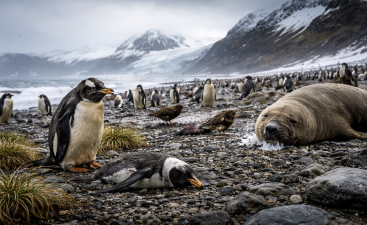
Highly pathogenic avian influenza (H5N1) has now been confirmed in birds on an Australian territory for the first time, after gentoo penguins tested positive on Heard Island in the sub-Antarctic. The detection marks a significant epidemiological milestone, expanding the virus’s documented footprint in the Southern Ocean region and underscoring the growing global reach of H5N1 (clade 2.3.4.4b).
Where Is Heard Island and Why It Matters
Heard Island lies more than 4,000 km southwest of Perth and about 1,700 km north of Antarctica. It forms part of Australia’s remote external territories in the Southern Ocean and is known for its pristine ecosystems and rich seabird and marine mammal populations.
The isolation of Heard Island has historically acted as a natural biosecurity barrier. The confirmation of H5N1 in wildlife there signals that even remote ecosystems are not insulated from global disease dynamics.
First Bird Infection in an Australian Territory
The confirmed infection in Gentoo penguin represents the first known detection of H5 avian influenza in a bird species within Australia’s external territories. The virus has also been detected in:
- Southern elephant seals
- Antarctic fur seals
Initial cases in southern elephant seals were confirmed in November 2025. The latest findings were based on samples collected during a February 2026 voyage and tested at the Commonwealth Scientific and Industrial Research Organisation (CSIRO)’s Australian Centre for Disease Preparedness.
The Global Spread of H5N1 (Clade 2.3.4.4b)
The highly pathogenic H5N1 strain (clade 2.3.4.4b) has caused unprecedented mortality events worldwide. It has infected and killed millions of:
- Wild seabirds
- Terrestrial wild birds
- Commercial poultry
- Marine mammals in some regions
Its spread to the Southern Ocean reflects migratory bird pathways and complex interspecies transmission dynamics.
No Evidence of Mass Mortality — For Now
On-ground observations by scientists aboard research vessel RSV Nuyina reported no signs of ongoing mass mortality in the areas visited. Authorities described the findings as consistent with current scientific understanding of virus spread.
However, experts caution that the absence of visible die-offs does not eliminate ecological risk. Remote locations often limit real-time surveillance, and outbreaks can escalate rapidly under conducive conditions.
Biosecurity and Preparedness Response
Australian authorities emphasized that the country’s H5 bird flu freedom status remains unchanged, as no cases have been detected within mainland poultry or wild bird populations.
The government has announced over A$100 million in preparedness funding, aimed at:
- Strengthening national response capabilities
- Deploying rapid response equipment across states and territories
- Enhancing wildlife disease surveillance
- Building resilience among at-risk native species
The incident reinforces the importance of coordinated biosecurity strategies involving scientific agencies, conservation bodies, and agricultural sectors.
Ecological Implications for the Southern Ocean
The Southern Ocean and Antarctic ecosystems are characterized by tightly interconnected food webs. Penguins, seals, and seabirds play crucial roles in nutrient cycling and marine ecosystem stability.
Potential long-term risks include:
- Disruption of seabird breeding colonies
- Secondary transmission among marine mammals
- Alteration of predator-prey dynamics
- Cascading ecological impacts in fragile polar environments
Given climate change-driven shifts in species distribution and migratory patterns, emerging diseases may become more frequent in high-latitude regions.
What to Note for Prelims?
- H5N1 (clade 2.3.4.4b) is a highly pathogenic avian influenza strain.
- Gentoo penguin confirmed infected on Heard Island.
- Heard Island is an Australian external territory in the Southern Ocean.
- Testing conducted at CSIRO’s Australian Centre for Disease Preparedness.
- Southern elephant seals and Antarctic fur seals also detected with H5 virus.
What to Note for Mains?
- Discuss the global spread of zoonotic diseases in the context of migratory species.
- Examine the ecological risks of avian influenza in polar ecosystems.
- Analyse the importance of biosecurity and early warning systems in wildlife disease management.
- Evaluate the link between climate change and emerging infectious diseases.