
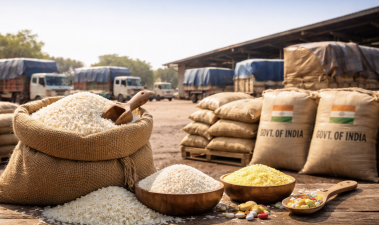
The Government of India has recently decided to temporarily suspend the fortification of rice distributed under the Pradhan Mantri Garib Kalyan Anna Yojana (PMGKAY) and other welfare schemes. This move follows a comprehensive review and a scientific study conducted by IIT Kharagpur on the stability and shelf life of Fortified Rice Kernels (FRK) and Fortified Rice (FR) under real storage conditions across diverse agro-climatic zones in India. The study brought into light challenges in maintaining nutrient levels during prolonged storage, prompting the government to pause rice fortification until a more effective nutrient delivery system is established.
Review and Findings on Rice Fortification
The study by IIT Kharagpur examined key factors affecting fortified rice quality. Moisture content, temperature, relative humidity, storage conditions, and packaging materials were found to critically influence the stability of micronutrients in fortified rice. Prolonged storage and routine handling led to nutrient degradation, reducing the effective shelf life below expectations. Given that rice stocks often remain in storage for two to three years due to procurement volumes and annual consumption rates, this degradation compromises the intended nutritional benefits.
Impact on Welfare Schemes and Food Security
Despite the temporary discontinuation of rice fortification, the government has assured that foodgrain entitlements under PMGKAY, the Public Distribution System (PDS), Integrated Child Development Services (ICDS), and the Mid-Day Meal Scheme will remain unaffected. The total rice availability in the central pool is projected at 674 lakh metric tonnes (LMT) for the upcoming Kharif Marketing Season (KMS) 2025-26, exceeding the annual allocation of 372 LMT under these welfare schemes. States and Union Territories have been granted flexibility to supply either fortified or non-fortified rice during this transitional phase.
Future Directions and Nutrient Delivery Mechanisms
The government’s decision reflects a cautious approach towards ensuring nutritional outcomes without compromising food quality. Efforts will focus on developing a more robust and effective nutrient delivery mechanism. This includes improving packaging technologies, storage practices, and possibly exploring alternative fortification methods or nutrient sources that can withstand long-term storage and handling.
Operational Flexibility for States and UTs
For KMS 2025-26 and pending stocks from KMS 2024-25, States and UTs may choose to supply fortified or non-fortified rice based on their operational capabilities and logistical considerations. This flexibility aims to ensure uninterrupted foodgrain distribution while addressing the challenges posed by fortification under current storage and supply conditions.
Topics for Prelims:
Pradhan Mantri Garib Kalyan Anna Yojana (PMGKAY)
- Launched in 2020 to provide free foodgrains during COVID-19 pandemic.
- Focuses on rice, wheat, and pulses distribution to poor families.
- Operates through the Public Distribution System (PDS).
- Includes schemes like ICDS and Mid-Day Meal for nutritional support.
- Rice fortification was introduced to combat micronutrient deficiencies.
Fortified Rice and Fortified Rice Kernels (FRK)
- Fortified rice contains added micronutrients like iron, folic acid, and vitamin B12.
- Fortified Rice Kernels are premixed fortified grains blended with normal rice.
- Designed to improve nutritional status, especially among vulnerable groups.
- Susceptible to nutrient degradation during storage and handling.
- Packaging and storage conditions critically affect shelf life and nutrient retention.
Storage and Supply Chain Challenges in Food Fortification
- Long storage periods can reduce micronutrient levels in fortified foods.
- Temperature, humidity, and moisture are key factors affecting food quality.
- Packaging materials influence protection against environmental factors.
- Supply chain logistics affect timely distribution and food freshness.
- Effective nutrient delivery requires integration of storage, transport, and handling best practices.
Questions for UPSC:
- Critically discuss the challenges of food fortification in large-scale welfare schemes like PMGKAY and its impact on nutritional security.
- Examine the role of storage and supply chain management in maintaining food quality and nutrient retention in fortified foods.
- Analyse the significance of micronutrient fortification in combating malnutrition. How can technology improve nutrient delivery mechanisms in public distribution systems?
- Estimate the potential socio-economic benefits and limitations of fortifying staple foods in India’s public welfare programmes.
Answer Hints:
1. Critically discuss the challenges of food fortification in large-scale welfare schemes like PMGKAY and its impact on nutritional security.
- Large-scale storage leads to micronutrient degradation due to moisture, temperature, and humidity variations.
- Prolonged storage (2-3 years) shortens effective shelf life of fortified rice, reducing nutrient efficacy.
- Packaging materials and handling practices often insufficient to preserve nutrient stability.
- Logistical complexities in distribution can cause delays and further nutrient loss.
- Temporary discontinuation reflects difficulty in ensuring consistent nutritional outcomes at scale.
- Impact – Nutritional security compromised if fortified food loses intended micronutrient benefits.
2. Examine the role of storage and supply chain management in maintaining food quality and nutrient retention in fortified foods.
- Storage conditions (temperature, humidity, moisture) critically affect micronutrient stability.
- Inadequate packaging accelerates nutrient degradation and contamination risks.
- Supply chain delays increase storage duration, exacerbating nutrient loss.
- Proper cold chain or controlled environment storage can extend shelf life and nutrient retention.
- Effective coordination among procurement, storage, and distribution ensures timely delivery of quality fortified foods.
- Innovative packaging and handling protocols needed for large-scale fortification success.
3. Analyse the significance of micronutrient fortification in combating malnutrition. How can technology improve nutrient delivery mechanisms in public distribution systems?
- Micronutrient fortification addresses hidden hunger by supplementing iron, folic acid, vitamin B12, etc.
- Improves health outcomes, especially for vulnerable groups like children and pregnant women.
- Technology can enhance nutrient stability via advanced encapsulation and improved fortification processes.
- Smart packaging and real-time monitoring can track nutrient degradation and storage conditions.
- Alternative nutrient delivery methods (e.g., biofortification, nano-encapsulation) can improve shelf life and efficacy.
- Digital supply chain management can optimize distribution and reduce delays.
4. Estimate the potential socio-economic benefits and limitations of fortifying staple foods in India’s public welfare programmes.
- Benefits – Reduces micronutrient deficiencies, improves public health, and enhances productivity.
- Can lower healthcare costs by preventing malnutrition-related diseases.
- Supports inclusive growth by improving nutritional status of poor and vulnerable populations.
- Limitations – Nutrient loss during storage undermines effectiveness at scale.
- High costs of fortification technology and quality control pose challenges.
- Operational complexities and variable acceptance among beneficiaries may limit impact.