
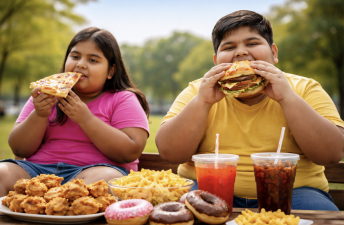
Recent data from the World Obesity Atlas 2026 reveals a sharp rise in childhood obesity in India and globally. Nearly 15 million Indian children aged 5 to 9 and over 26 million aged 10 to 19 are overweight or obese. India ranks second worldwide after China in the number of children with high Body Mass Index (BMI). The report warns that global targets to reduce childhood obesity by 2025 have been missed, with efforts now extended to 2030. The situation poses serious health risks and calls for urgent government action.
Global and Indian Childhood Obesity Trends
India has 41 million children with high BMI and 14 million classified as obese. China leads with 62 million high BMI and 33 million obese children. The United States follows with 27 million and 13 million respectively. Over 200 million school-age children with overweight or obesity are concentrated in just 10 countries. By 2040, the number of children worldwide with obesity or overweight is projected to reach 507 million. The global rise from 14.6% in 2010 to 20.7% in 2025 signals a worsening crisis.
Health Risks and Future Projections
Increasing childhood obesity in India is linked to rising disease indicators by 2040. High BMI in children increases risks for diabetes, heart disease and other chronic conditions. Among Indian women aged 15 to 49, 13.4% have high BMI and 4.2% suffer from Type 2 diabetes. Early childhood nutrition and lifestyle habits contribute to these trends. The report marks the urgent need to address these health risks at a young age.
Risk Factors and Preventive Measures
Key risk factors include physical inactivity and poor nutrition. In India, 74% of adolescents aged 11 to 17 do not meet recommended physical activity levels. Only 35.5% of school-age children receive school meals. Sub-optimal breastfeeding affects 32.6% of infants aged 1 to 5 months. Consumption of sugary drinks among children aged 6 to 10 averages 50 ml daily. The World Obesity Federation urges governments to implement taxes on sugary beverages and restrict marketing to children.
Call for Government Action
The World Obesity Federation stresses immediate intervention. Johanna Ralston, CEO, emphasises the failure to treat childhood obesity as a serious disease. Governments must enhance prevention, management and care for affected children. Policies targeting diet, physical activity and public awareness are critical to reversing current trends.
Topics for Prelims:
Childhood Obesity in India
- 41 million children with high BMI in India (2025)
- 14 million children classified as obese
- 74% adolescents physically inactive
- Only 35.5% school children receive meals
- 32.6% infants face sub-optimal breastfeeding
Global Obesity Statistics
- 507 million children projected obese/overweight by 2040
- Top 3 countries – China, USA
- 20.7% children overweight or obese worldwide (2025)
- Increase from 14.6% in 2010
- Over 200 million overweight children in 10 countries
Health and Nutrition Risk Factors
- High BMI linked to diabetes, heart disease
- 13.4% women aged 15-49 with high BMI in India
- 4.2% women with Type 2 diabetes
- Children consume 50 ml sugary drinks daily
- Physical inactivity major contributor
Questions for Mains:
- Critically analyse the impact of childhood obesity on public health systems in India and suggest policy measures for effective management. [GS-III-Economic Development]
- With suitable examples, point out the role of government interventions like taxation and marketing restrictions in controlling non-communicable diseases among children. [GS-II-Governance]
- Estimate the socio-economic factors contributing to rising childhood obesity in urban and rural India and underline their implications on Indian society. [GS-I-Indian Society]
- Critically analyse the global failure to meet the 2025 childhood obesity reduction target and discuss the challenges in achieving the 2030 goals. [GS-III-Environment & DM]
Answer Hints:
1. Critically analyse the impact of childhood obesity on public health systems in India and suggest policy measures for effective management. [GS-III-Economic Development]
- Childhood obesity increases burden of NCDs like diabetes, cardiovascular diseases, straining healthcare resources.
- Rising obesity in children leads to early onset of chronic diseases, increasing lifelong treatment costs and morbidity.
- India’s public health system faces challenges in screening, prevention, and management due to limited infrastructure and awareness.
- Policy measures – Implement school-based nutrition and physical activity programs to promote healthy lifestyles.
- Strengthen primary healthcare with obesity screening, counseling, and management services.
- Introduce regulatory policies like sugar taxes, marketing restrictions, and promote breastfeeding to reduce risk factors.
2. With suitable examples, point out the role of government interventions like taxation and marketing restrictions in controlling non-communicable diseases among children. [GS-II-Governance]
- Taxation on sugar-sweetened beverages (e.g., Mexico’s soda tax) reduces consumption and obesity rates among children.
- Marketing restrictions limit exposure of children to unhealthy food advertisements, reducing demand for junk food.
- India’s potential to implement sugar taxes and ban marketing targeting children to curb childhood obesity.
- Complementary policies like school meal programs and nutrition labeling enhance effectiveness of interventions.
- Government-led awareness campaigns support behavior change and inform parents and children.
- Evidence shows multi-sectoral government action is vital for controlling childhood NCDs effectively.
3. Estimate the socio-economic factors contributing to rising childhood obesity in urban and rural India and underline their implications on Indian society. [GS-I-Indian Society]
- Urbanization leads to sedentary lifestyles, increased availability of processed and sugary foods.
- Higher income groups have greater access to calorie-dense foods; paradoxically, obesity also rising in lower socio-economic strata due to cheap unhealthy food.
- Rural areas face nutritional transition but limited awareness and infrastructure for healthy living.
- Physical inactivity prevalent due to reduced outdoor play and increased screen time in both urban and rural children.
- Implications – Increased healthcare costs, reduced productivity, social stigma, and burden on families.
- Calls for culturally sensitive, socio-economically tailored interventions to address obesity disparities.
4. Critically analyse the global failure to meet the 2025 childhood obesity reduction target and discuss the challenges in achieving the 2030 goals. [GS-III-Environment & DM]
- Global childhood obesity rose from 14.6% in 2010 to 20.7% in 2025, missing the 2025 target to halve the rise.
- Challenges include weak political commitment, inadequate funding, and fragmented multisectoral coordination.
- Commercial determinants – aggressive marketing by food and beverage industries undermine efforts.
- Socio-economic inequalities and urbanization accelerate obesity trends, especially in LMICs.
- COVID-19 pandemic worsened physical inactivity and unhealthy eating habits globally.
- To achieve 2030 goals, stronger governance, global cooperation, policy coherence, and community engagement are essential.