
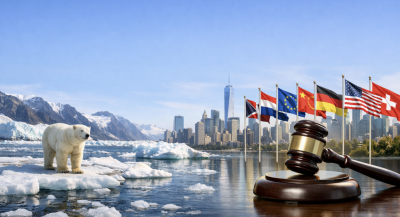
Recent discussions at global climate summits have brought into light the urgent need to reconsider key principles of international law due to climate change. Rising sea levels and fossil fuel phase-out demands are prompting debates on state sovereignty, territory, and maritime boundaries. These issues affect developing countries and small island states the most, raising questions about statehood, resource rights, and migration.
Fossil Fuels and Permanent Sovereignty Over Natural Resources
Permanent Sovereignty over Natural Resources (PSNR) is a core right allowing states to control and extract fossil fuels. Developing nations rely on this for economic independence. However, global efforts to limit temperature rise below 1.5°C push for phasing out fossil fuels. Proposals for a Fossil-Fuel Non-Proliferation Treaty are gaining support to keep fossil fuels underground. Developing countries may accept limited PSNR restrictions if compensated with finance and clean technology transfers from developed nations.
Climate Change Impact on Statehood and Territory
International law requires territory for statehood, as per the 1933 Montevideo Convention. Rising sea levels threaten the land of small island states, raising doubts about their continued statehood. The International Court of Justice (ICJ) states loss of territory does not automatically end statehood. Yet, legal clarity is lacking on how much territory loss is critical. Pacific Island nations insist their statehood must persist despite climate impacts. This situation demands equitable legal solutions beyond strict rules.
Climate-Induced Migration and Legal Gaps
People displaced by climate change do not fit the 1951 Refugee Convention definition. They lack international protection as “climate refugees”. Experts propose a new legal framework under the UNFCCC to recognise and protect such migrants. This would provide a political and legal basis for their resettlement and rights, addressing a growing humanitarian challenge.
Sea-Level Rise and Maritime Zones
Sea-level rise threatens coastal baselines that define maritime zones like territorial seas and exclusive economic zones. Some small island states demand “fixed baselines” to prevent loss of maritime rights. Others support “ambulatory baselines” that move with the coastline. Resolving this conflict requires reinterpretation of the United Nations Convention on the Law of the Sea (UNCLOS). This is essential to safeguard coastal state interests amid climate change.
Topics for Prelims:
Permanent Sovereignty Over Natural Resources (PSNR)
- PSNR allows states control over natural resources within their territory.
- It supports economic independence of developing countries.
- Fossil fuels are included under PSNR rights.
- Climate change demands challenge unrestricted PSNR use.
- Proposed Fossil-Fuel Non-Proliferation Treaty aims to limit extraction.
Statehood and Territory in International Law
- Montevideo Convention (1933) sets criteria for statehood.
- Territory is a mandatory element for state recognition.
- Sea-level rise threatens territory of small island states.
- ICJ says loss of territory does not always end statehood.
- Minimum territory size for statehood is not fixed legally.
Climate Refugees and International Protection
- 1951 Refugee Convention excludes climate migrants.
- Climate refugees lack formal international status.
- UNFCCC protocol suggested for their protection.
- Climate migration is increasing due to sea-level rise.
- Legal recognition would aid resettlement and rights.
Questions for Mains:
- Critically analyse the principle of Permanent Sovereignty over Natural Resources in the context of global climate change and fossil fuel phase-out demands. [GS-II-International Relations]
- Comment on the challenges posed by climate change to the concept of statehood under international law and the implications for small island states. [GS-II-Constitution of India & Polity]
- Explain the legal gaps in international refugee law concerning climate-induced migration and discuss possible frameworks for addressing these gaps. [GS-II-International Relations]
- Underline the disputes over maritime baselines due to sea-level rise and assess the need for reinterpretation of the United Nations Convention on the Law of the Sea (UNCLOS). [GS-I-World & Physical Geography]
Answer Hints:
1. Critically analyse the principle of Permanent Sovereignty over Natural Resources in the context of global climate change and fossil fuel phase-out demands. [GS-II-International Relations]
- PSNR grants states sovereign rights to control and exploit natural resources within their territory, including fossil fuels.
- It is a core principle supporting economic independence and development, especially for developing and least-developed countries.
- Global climate change urgency demands phasing out fossil fuels to limit temperature rise below 1.5°C, challenging unrestricted PSNR use.
- Proposals like the Fossil-Fuel Non-Proliferation Treaty seek to keep fossil fuels in the ground, conflicting with PSNR claims.
- Developing countries may accept limited, non-permanent restrictions on PSNR if compensated with finance and transfer of carbon-neutral technologies from developed nations.
- The principle must be balanced with global common concerns to avoid socio-economic harm while addressing climate imperatives.
2. Comment on the challenges posed by climate change to the concept of statehood under international law and the implications for small island states. [GS-II-Constitution of India & Polity]
- Statehood requires territory as per the 1933 Montevideo Convention, along with population, government, and capacity for international relations.
- Sea-level rise threatens the physical territory of small island states, raising questions about loss of statehood.
- The ICJ advisory opinion states loss of territory does not automatically terminate statehood, but legal clarity on minimum territory is lacking.
- Pacific Island nations insist on the continuity of statehood despite climate impacts, emphasizing equity and justice.
- The precarious nature of statehood under climate change demands reinterpretation of international law beyond strict territorial rules.
- UNFCCC and COP forums should address these gaps through equitable principles to protect vulnerable states.
3. Explain the legal gaps in international refugee law concerning climate-induced migration and discuss possible frameworks for addressing these gaps. [GS-II-International Relations]
- The 1951 Refugee Convention defines refugees based on persecution, excluding climate-induced migrants (“climate refugees”).
- Climate migrants lack formal international legal protection and rights under current refugee law.
- Sea-level rise and environmental degradation increasingly displace populations, creating urgent humanitarian challenges.
- Experts propose creating a new legal and political regime, possibly a Protocol under the UNFCCC, to recognize and protect climate refugees.
- Such a framework would enable international cooperation on protection, resettlement, and rights of affected populations.
- Political support from UNFCCC and Paris Agreement parties can facilitate adoption and implementation.
4. Underline the disputes over maritime baselines due to sea-level rise and assess the need for reinterpretation of the United Nations Convention on the Law of the Sea (UNCLOS). [GS-I-World & Physical Geography]
- Sea-level rise threatens coastal baselines, which determine maritime zones like territorial sea, contiguous zone, EEZ, and continental shelf.
- Small island states advocate for “fixed baselines” to preserve maritime rights despite coastline changes.
- Others support “ambulatory baselines” that shift with the changing coastline, as per current UNCLOS interpretations.
- These conflicting approaches create legal uncertainty and disputes over maritime entitlements.
- Resolving these issues requires reinterpretation or amendment of UNCLOS to address climate change impacts effectively.
- Such legal clarity is essential to safeguard coastal states’ sovereignty, resources, and maritime security amid rising seas.