
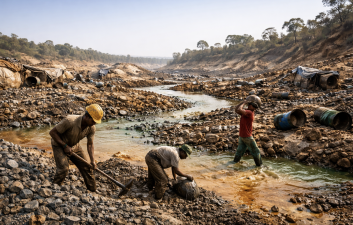
Recent investigations in 2026 reveal severe environmental and health damage caused by cobalt mining in the Democratic Republic of Congo (DRC). The CMOC Group Limited, the world’s largest cobalt producer, operates the Tenke Fungurume mine, which has been linked to pollution, health crises, and community displacement. This report marks the consequences of rapid cobalt production driven by the electric vehicle (EV) industry.
Mining Operations and Environmental Pollution
CMOC’s Tenke Fungurume mine expanded in 2023 with the 30k plant, a copper-cobalt processing facility processing 30,000 tons daily. This doubled the mine’s ore processing capacity. The plant is close to Fungurume town, exposing thousands to pollution. Independent air monitoring detected sulphur dioxide (SO2) levels exceeding safety limits. SO2 is a toxic gas causing respiratory problems. Workers reported frequent gas leaks and malfunctioning safety alarms. These findings contradict CMOC’s denial of pollution and health risks.
Health Impacts on Local Communities
Since 2023, residents near the mine report severe health issues. Symptoms include nosebleeds, coughing blood, respiratory diseases, and pregnancy complications such as stillbirths. A three-year investigation analysed over 1,200 medical records and conducted interviews. The data show a sharp rise in respiratory illnesses after the plant started operating. The health crisis is linked to toxic emissions from mining activities.
Global Demand and Economic Context
The surge in cobalt mining is driven by the global EV boom. In 2024, 43% of cobalt demand came from EV battery production. Much of the cobalt mined at Tenke Fungurume is exported to China and Europe. Major car manufacturers like BMW, Mercedes-Benz, Stellantis, and Volkswagen use this cobalt in lithium-ion batteries. This demand fuels rapid expansion but raises ethical and environmental concerns.
Governance and Certification Issues
In 2024, Tenke Fungurume became the first African and Chinese-owned mine to earn the Copper Mark certification for environmental and social governance. However, the recent report challenges the credibility of this certification. The documented pollution and health damage suggest gaps in monitoring and enforcement of environmental standards.
Topics for Prelims:
CMOC Group Limited
- Largest global cobalt producer.
- Operates Tenke Fungurume mine in DRC.
- Expanded processing capacity with 30k plant in 2023.
- Denies responsibility for pollution and health issues.
- Supplies cobalt to global EV manufacturers.
Cobalt Mining in Democratic Republic of Congo
- DRC is the world’s top cobalt producer.
- Mining impacts include pollution and community displacement.
- SO2 emissions cause respiratory health problems.
- Mining operations fuelled by EV battery demand.
- Environmental governance and certification remain weak.
Electric Vehicle Industry and Cobalt Demand
- EVs rely on lithium-ion batteries containing cobalt.
- 43% of global cobalt demand in 2024 from EV sector.
- Major automakers use cobalt from DRC mines.
- Rising demand accelerates mining expansion in DRC.
- Raises ethical and environmental sustainability concerns.
Questions for Mains:
- Critically analyse the environmental and social challenges posed by mineral extraction in developing countries with suitable examples. [GS-III-Economic Development]
- Point out the role of supply chain transparency in ensuring ethical sourcing of minerals like cobalt and assess its impact on global industries. [GS-II-International Relations]
- Underline the significance of environmental certifications such as the Copper Mark and evaluate their effectiveness in regulating mining activities. [GS-II-Governance]
- Estimate the environmental trade-offs of electric vehicle adoption in the context of raw material extraction and suggest sustainable alternatives. [GS-III-Environment & DM]
Answer Hints:
1. Critically analyse the environmental and social challenges posed by mineral extraction in developing countries with suitable examples. [GS-III-Economic Development]
- Environmental pollution – mining activities release toxic gases (e.g., SO2), contaminate air and water, causing ecological damage.
- Health impacts – local communities suffer respiratory illnesses, pregnancy complications, and other health crises linked to mining emissions.
- Displacement – large-scale mining leads to forced relocation of thousands, disrupting livelihoods and social fabric.
- Weak governance – inadequate enforcement of environmental laws and poor monitoring exacerbate negative impacts.
- Economic dependence – developing countries rely on mineral exports, creating a dilemma between development and environmental protection.
- Example – CMOC’s Tenke Fungurume mine in DRC causing pollution, health issues, and displacement despite environmental certifications.
2. Point out the role of supply chain transparency in ensuring ethical sourcing of minerals like cobalt and assess its impact on global industries. [GS-II-International Relations]
- Supply chain transparency helps trace mineral origins, ensuring compliance with environmental and human rights standards.
- Ethical sourcing reduces risks of child labor, conflict minerals, and environmental degradation in supplier countries.
- Consumers and industries (e.g., EV manufacturers) increasingly demand responsible sourcing to protect brand reputation.
- Transparency enables accountability and pressure on companies to improve mining practices.
- Challenges include complex supply chains, lack of reliable data, and enforcement difficulties in developing countries.
- Impact – major automakers (BMW, Mercedes-Benz, Volkswagen) source cobalt from DRC, denoting need for transparent, ethical supply chains.
3. Underline the significance of environmental certifications such as the Copper Mark and evaluate their effectiveness in regulating mining activities. [GS-II-Governance]
- Environmental certifications aim to promote responsible mining by setting standards for social and environmental performance.
- Copper Mark certification is a pioneering ESG standard for copper and cobalt mines, enhancing investor and consumer confidence.
- They encourage companies to adopt better pollution control, community engagement, and labor practices.
- Effectiveness is limited by weak monitoring, potential conflicts of interest, and lack of independent verification.
- Case study – Tenke Fungurume mine received Copper Mark despite evidence of pollution and health impacts, questioning certification credibility.
- Improved transparency, stricter audits, and stakeholder participation are essential to strengthen certification impact.
4. Estimate the environmental trade-offs of electric vehicle adoption in the context of raw material extraction and suggest sustainable alternatives. [GS-III-Environment & DM]
- EV adoption reduces fossil fuel emissions but increases demand for minerals like cobalt, causing environmental harm in mining regions.
- Mining leads to habitat destruction, pollution (SO2 emissions), and social issues such as displacement and health risks.
- Raw material supply chains often lack transparency and ethical sourcing, raising sustainability concerns.
- Sustainable alternatives include developing cobalt-free batteries, recycling materials, and improving mining governance.
- Promoting circular economy approaches and investing in battery technology innovation can reduce environmental footprint.
- Balancing clean energy goals with responsible resource extraction is critical for truly sustainable EV adoption.