
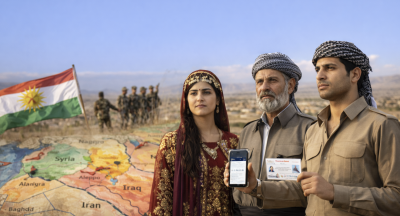
Recent reports reveal that the US Central Intelligence Agency (CIA) is engaging with Kurdish armed groups in Iran and Iraq. This move aims to increase pressure on Iran amid rising tensions. Kurdish fighters may receive military support to launch attacks on Iranian security forces from bases in northern Iraq. Iran’s Revolutionary Guards have responded by striking Kurdish positions in Iraq. This development has brought the Kurds back into global focus due to their strategic role in West Asia.
Who Are The Kurds?
The Kurds are an ethnic group native to the Mesopotamian plains and nearby mountains. Their traditional homeland, Kurdistan, spans parts of Turkey, Syria, Iraq, Iran, and Armenia. Kurdistan is not a recognised country but a cultural region. Around 30-40 million Kurds live worldwide, making them the largest stateless ethnic group. They speak Kurdish, a northwestern Iranian language with several dialects. Most Kurds follow Sunni Islam, but there are also Shia Muslims, Alevis, Yazidis, and Christians among them.
Historical Repression And Conflicts
Kurds have faced political repression and armed conflicts in several countries: – In Turkey, Kurds form 15-19% of the population. The Kurdistan Workers’ Party (PKK) began an insurgency in 1984 seeking independence. The conflict has caused over 40,000 deaths. The PKK now demands cultural and political rights. – In Iran, Kurds are about 10% of the population. After the 1979 revolution, Kurdish uprisings were suppressed. The Kurdistan Free Life Party (PJAK) continues armed attacks on Iranian forces. – In Iraq, Kurds are 15% of the population. Saddam Hussein’s regime used chemical weapons on Kurds in 1988. Kurds established a semi-autonomous region but lost ground after a rejected 2017 independence referendum. – In Syria, Kurds are 10% of the population and have faced statelessness since 1962. Kurdish militias have controlled northern areas since 2012 and fought against ISIL.
Kurdish Political Organisations In Iran
Several Kurdish groups operate in Iran and Iraq: – Democratic Party of Iranian Kurdistan (KDPI), founded in 1945, with Peshmerga fighters. – Kurdistan Free Life Party (PJAK), active since 2004. – Kurdistan Freedom Party (PAK). – Komala Party of Iranian Kurdistan. – Khabat Organisation. On 22 February 2026, five groups formed the “Coalition of Political Forces of Iranian Kurdistan.” They seek to strengthen Kurdish political influence amid regional tensions.
Geopolitical Impact
The Kurds are caught between regional powers like Iran, Turkey, and Iraq. Their strategic location and military capabilities make them key players in West Asian conflicts. US interest in supporting Kurdish groups signals a shift in regional dynamics. Iran’s military response marks the fragile security environment. Kurdish actions influence oil trade routes and international relations in the Middle East.
Topics for Prelims:
Kurds
- Largest stateless ethnic group with 30-40 million worldwide.
- Homeland called Kurdistan spans Turkey, Syria, Iraq, Iran, Armenia.
- Speak Kurdish, an Iranian language with multiple dialects.
- Religiously diverse – mostly Sunni Muslims, plus Shia, Yazidis, Christians.
- Long history of political repression and armed conflicts.
Kurdish Political Groups
- Democratic Party of Iranian Kurdistan (KDPI) founded in 1945.
- Kurdistan Free Life Party (PJAK) active since 2004.
- Coalition of Political Forces of Iranian Kurdistan formed in 2026.
- Groups operate mainly in Iran and northern Iraq.
- Engaged in armed struggle and political activism.
Geopolitical Context
- Kurds spread across multiple West Asian states.
- US CIA considers arming Kurdish groups against Iran.
- Iran’s Revolutionary Guards retaliated against Kurdish bases in Iraq.
- Kurds influence regional stability and energy trade routes.
- Longstanding ethnic tensions fuel conflicts in Turkey, Iran, Iraq, Syria.
Questions for Mains:
- Critically analyse the challenges faced by stateless ethnic groups like the Kurds in maintaining cultural identity and political autonomy. [GS-I-Indian Society]
- Comment on the role of non-state actors in shaping the geopolitics of West Asia with reference to Kurdish armed groups and their impact on regional security. [GS-III-Internal & External Security]
- Explain the significance of ethnic conflicts in West Asia for global energy security and international relations. How can international diplomacy address these issues? [GS-II-International Relations]
- With suitable examples, underline the impact of historical repression on the political mobilisation of ethnic minorities, focusing on the Kurdish struggle in Turkey and Iran. [GS-I-Modern Indian History]
Answer Hints:
1. Critically analyse the challenges faced by stateless ethnic groups like the Kurds in maintaining cultural identity and political autonomy. [GS-I-Indian Society]
- Kurds are the largest stateless ethnic group (~30-40 million) spread across Turkey, Iran, Iraq, Syria, and Armenia, lacking a sovereign nation.
- Restrictions on language, culture, and political rights in host countries (e.g., Kurdish language bans in Turkey, statelessness in Syria) undermine identity preservation.
- Political repression and armed conflicts (PKK insurgency in Turkey, PJAK in Iran) limit political autonomy and fuel instability.
- Fragmentation across multiple states complicates unified political representation and self-determination efforts.
- Religious and cultural diversity within Kurds adds complexity to internal cohesion and external recognition.
- International geopolitical interests (e.g., US support, regional rivalries) both offer opportunities and pose risks to Kurdish autonomy.
2. Comment on the role of non-state actors in shaping the geopolitics of West Asia with reference to Kurdish armed groups and their impact on regional security. [GS-III-Internal & External Security]
- Kurdish armed groups (PKK, PJAK, Peshmerga) operate across borders, challenging state sovereignty and influencing regional power balances.
- These groups engage in armed struggle for autonomy or independence, causing prolonged conflicts (e.g., PKK-Turkey conflict with 40,000+ deaths).
- Non-state Kurdish actors serve as proxies or leverage points for external powers like the US, impacting Iran-US tensions.
- Cross-border operations and alliances complicate security dynamics between Turkey, Iran, Iraq, and Syria.
- Kurdish militias have been very important in fighting ISIL, affecting counterterrorism strategies and regional alliances.
- Iran’s military strikes on Kurdish bases in Iraq exemplify the fragile security environment and risk of escalation due to non-state actors.
3. Explain the significance of ethnic conflicts in West Asia for global energy security and international relations. How can international diplomacy address these issues? [GS-II-International Relations]
- West Asia’s ethnic conflicts (e.g., Kurdish struggles) destabilize key oil-producing regions, threatening global energy supply and trade routes.
- Conflicts in Iraq, Syria, and Iran affect crude oil prices and disrupt pipelines and maritime routes vital for global markets.
- Ethnic tensions complicate regional cooperation, fueling proxy wars and involvement of global powers (US, Russia, Iran, Turkey).
- Diplomacy needs to promote inclusive governance, minority rights, and regional dialogue to reduce ethnic grievances.
- International mediation can support conflict resolution frameworks, autonomy arrangements, and cross-border cooperation.
- Multilateral engagement through UN, OIC, and regional forums can help balance interests and ensure energy security.
4. With suitable examples, underline the impact of historical repression on the political mobilisation of ethnic minorities, focusing on the Kurdish struggle in Turkey and Iran. [GS-I-Modern Indian History]
- In Turkey, decades-long bans on Kurdish language and identity led to the rise of the PKK insurgency in 1984 demanding independence.
- PKK’s evolution from independence to cultural and political rights demands shows repression’s role in shaping political goals.
- In Iran, post-1979 revolution suppression of Kurdish uprisings forced militants to relocate and form groups like PJAK for armed resistance.
- Historical repression fueled Kurdish nationalism and consolidated political organisations (KDPI, PJAK) advocating autonomy.
- State violence, e.g., chemical attack on Halabja Kurds in Iraq (1988), intensified Kurdish mobilisation across borders.
- Repression entrenched mistrust between Kurds and central governments, sustaining cycles of conflict and political activism.