
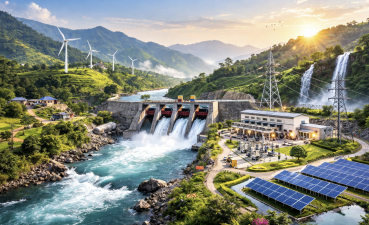
The Government of India has approved a new Small Hydro Power (SHP) Development Scheme for 2026-31. This scheme aims to install about 1500 MW of small hydro projects across the country. It focuses on hilly and North Eastern states, which have high potential for such renewable energy sources. The scheme has a budget of Rs. 2584.60 crore and is expected to attract Rs. 15,000 crore in investments. It supports India’s clean energy goals and rural development.
Scheme Overview and Objectives
The SHP scheme targets projects with capacities between 1 and 25 MW. It promotes decentralised power generation with minimal transmission losses. The scheme provides financial assistance to states for project installation. North Eastern and border districts receive higher subsidies (up to Rs. 3.6 crore per MW or 30% of project cost). Other states get Rs. 2.4 crore per MW or 20% of project cost. The scheme encourages local manufacturing of plant and machinery, supporting Atmanirbhar Bharat.
Financial and Employment Benefits
A total of Rs. 2,532 crore is allocated for project implementation. This will leverage Rs. 15,000 crore in investments. The scheme is expected to generate 51 lakh person-days of employment during construction. It also creates long-term jobs in operation and maintenance, mostly in rural and remote areas. This supports socio-economic growth and local livelihoods.
Environmental and Social Impact
SHP projects are environmentally friendly. They avoid large land acquisition, deforestation, and displacement of communities. The decentralised nature reduces transmission losses. Project lifespans typically range from 40 to over 60 years, ensuring sustainable energy supply. The scheme also promotes rural development by attracting local investment.
Project Preparation and Future Pipeline
The scheme incentivises states to prepare detailed project reports (DPRs) for about 200 future projects. Rs. 30 crore is set aside to support government agencies in DPR preparation. This will create a strong pipeline of SHP projects, accelerating sector growth.
Topics for Prelims:
Small Hydro Power Projects
- Capacity range – 1 to 25 MW per project.
- Decentralised power generation reduces transmission loss.
- Typical project life – 40 to 60+ years.
- Environmentally sustainable with minimal land and forest impact.
- Boosts rural and remote area development.
Financial Assistance and Investment
- Rs. 3.6 crore per MW or 30% cost in NE and border districts.
- Rs. 2.4 crore per MW or 20% cost in other states.
- Overall scheme outlay – Rs. 2584.60 crore.
- Expected investment leverage – Rs. 15,000 crore.
- Supports Atmanirbhar Bharat via indigenous manufacturing.
Employment and Socio-economic Impact
- 51 lakh person-days employment during construction.
- Long-term jobs in operation and maintenance.
- Focus on rural and remote population upliftment.
- Encourages local investment and development.
- Supports sustainable livelihoods in hilly regions.
Questions for Mains:
- Critically discuss the role of Small Hydro Power projects in India’s renewable energy transition and rural development. [GS-III-Economic Development]
- Examine the environmental benefits of Small Hydro Power projects and their impact on local communities. Analyse how decentralised energy generation reduces transmission losses. [GS-III-Environment & DM]
- Estimate the economic and social impact of financial incentives for renewable energy projects in border and North Eastern regions of India. Point out challenges in implementing such schemes. [GS-II-Governance]
- Analyse the significance of Atmanirbhar Bharat in the renewable energy sector with reference to indigenous manufacturing of plant and machinery. Critically discuss its implications for India’s energy security. [GS-III-Economic Development]
Answer Hints:
1. Critically discuss the role of Small Hydro Power projects in India’s renewable energy transition and rural development. [GS-III-Economic Development]
- SHP projects contribute 1-25 MW decentralized clean energy, supporting India’s renewable capacity addition targets.
- They harness untapped hydro potential in hilly and remote areas, especially North Eastern states, aiding energy access.
- Decentralized nature reduces transmission losses and dependence on large grid infrastructure.
- Promote rural development by creating employment during construction and operation phases (51 lakh person-days).
- Support socio-economic upliftment through local investment and long-term sustainable livelihoods.
- Challenges include terrain difficulties, financing, and project execution delays but government schemes mitigate these.
2. Examine the environmental benefits of Small Hydro Power projects and their impact on local communities. Analyse how decentralised energy generation reduces transmission losses. [GS-III-Environment & DM]
- SHP projects avoid large-scale land acquisition, deforestation, and displacement compared to large hydro projects.
- They have minimal ecological footprint, preserving biodiversity and water flow regimes.
- Long project lifespan (40-60+ years) ensures sustained clean energy supply with low carbon emissions.
- Decentralized generation reduces need for long transmission lines, cutting transmission losses and infrastructure costs.
- Local communities benefit from improved energy access, employment, and socio-economic development.
- Potential challenges include localized environmental impacts and need for community engagement for sustainability.
3. Estimate the economic and social impact of financial incentives for renewable energy projects in border and North Eastern regions of India. Point out challenges in implementing such schemes. [GS-II-Governance]
- Higher financial assistance (Rs. 3.6 crore/MW or 30% cost) incentivizes project development in difficult, strategic border and NE areas.
- Leverages Rs. 15,000 crore investment, boosting local economies and infrastructure development.
- Generates employment, improving livelihoods in remote, underserved regions.
- Supports national security by developing energy infrastructure near international borders.
- Challenges include difficult terrain, logistical issues, bureaucratic delays, and capacity constraints in local agencies.
- Need for sustained policy support, capacity building, and community participation to ensure scheme success.
4. Analyse the significance of Atmanirbhar Bharat in the renewable energy sector with reference to indigenous manufacturing of plant and machinery. Critically discuss its implications for India’s energy security. [GS-III-Economic Development]
- Scheme mandates 100% indigenous sourcing of plant and machinery, promoting domestic manufacturing and supply chains.
- Reduces dependence on imports, mitigating risks from global supply disruptions and price volatility.
- Boosts Make in India initiative, generating manufacturing jobs and technological capabilities.
- Enhances energy security by ensuring availability and maintainability of critical components locally.
- Challenges include technology gaps, quality standards, and scaling up manufacturing capacity.
- Long-term benefits include stronger renewable energy ecosystem and reduced foreign exchange outflows.