
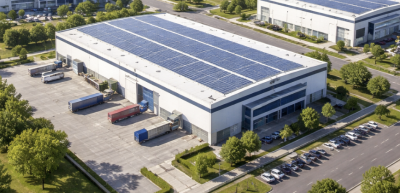
The Union Cabinet, led by Prime Minister Narendra Modi, approved the Bharat Audyogik Vikas Yojna (BHAVYA) in 2026. This scheme allocates Rs. 33,660 crore to develop 100 plug-and-play industrial parks across India. BHAVYA aims to boost manufacturing, create jobs, and enhance ease of doing business with world-class infrastructure.
Background and Objectives
BHAVYA builds on the success of Industrial Smart Cities under the National Industrial Corridor Development Programme (NICDP). It is a joint effort with states and private partners. The goal is to unlock India’s manufacturing potential and support Atmanirbhar Bharat by creating ready-to-use industrial ecosystems.
Key Features of BHAVYA
The scheme promotes deregulation and investor-friendly reforms. It provides streamlined approvals and single-window clearance systems. Industrial parks will range from 100 to 1000 acres with financial support up to Rs. 1 crore per acre for core, value-added, and social infrastructure. External infrastructure support up to 25% of project cost ensures connectivity.
Design and Sustainability
BHAVYA parks will follow PM GatiShakti principles for seamless multimodal connectivity. They will incorporate green energy and sustainable resource use. Integrated underground utility corridors will allow maintenance without disruption. The parks aim to set benchmarks in efficiency, reliability, and productivity.
Economic Impact and Employment
The scheme will generate large-scale direct and indirect employment in manufacturing, logistics, and services. It will strengthen domestic supply chains through cluster-based development. BHAVYA covers all states and union territories, benefiting manufacturers, MSMEs, startups, workers, and local communities.
Topics for Prelims:
Bharat Audyogik Vikas Yojna (BHAVYA)
- Launched in 2026 with Rs. 33,660 crore allocation.
- Develops 100 plug-and-play industrial parks nationwide.
- Supports core, value-added, and social infrastructure.
- Streamlines approvals with single-window systems.
- Follows PM GatiShakti principles for connectivity.
National Industrial Corridor Development Corporation (NICDC)
- Under DPIIT, Ministry of Commerce and Industry.
- Develops industrial smart cities and parks.
- Implements 20 projects across 13 states.
- Promotes plug-and-play industrial ecosystems.
- Enhances manufacturing competitiveness and employment.
Plug-and-Play Industrial Parks
- Ready-to-use industrial ecosystems.
- Pre-developed land, utilities, and approvals.
- Speeds up industrial operations and investments.
- Includes built-to-suit units and testing labs.
- Supports sustainable and green infrastructure.
Questions for Mains:
- Critically analyse the role of plug-and-play industrial parks in enhancing India’s manufacturing sector and ease of doing business. [GS-III-Economic Development]
- Explain the significance of PM GatiShakti in improving industrial infrastructure and multimodal connectivity in India. [GS-III-World & Physical Geography]
- Comment on how industrial cluster development under schemes like BHAVYA can promote regional economic growth and employment generation. [GS-III-Economic Development]
- With suitable examples, underline the challenges and opportunities in implementing large-scale industrial infrastructure projects in India. [GS-II-Governance]
Answer Hints:
1. Critically analyse the role of plug-and-play industrial parks in enhancing India’s manufacturing sector and ease of doing business. [GS-III-Economic Development]
- Plug-and-play parks provide ready-to-use land, infrastructure, and pre-approved utilities, drastically reducing setup time for manufacturers.
- They minimize entry barriers and regulatory delays through streamlined single-window clearance systems, enhancing ease of doing business.
- Such parks attract MSMEs, startups, and global investors by offering built-to-suit units, testing labs, and warehousing facilities.
- Integration of core, value-added, and social infrastructure supports holistic industrial ecosystems, improving productivity and worker welfare.
- By enabling faster operationalization, these parks accelerate manufacturing growth, exports, and Atmanirbhar Bharat goals.
- However, challenges include land acquisition, ensuring quality infrastructure, and maintaining sustainability standards.
2. Explain the significance of PM GatiShakti in improving industrial infrastructure and multimodal connectivity in India. [GS-III-World & Physical Geography]
- PM GatiShakti promotes integrated planning and execution of multimodal transport networks, reducing logistic costs and transit times.
- It ensures seamless last-mile connectivity through coordinated infrastructure across roads, railways, ports, and airports.
- The framework supports industrial parks by enabling efficient movement of raw materials and finished goods, boosting competitiveness.
- Use of digital tools and GIS mapping under GatiShakti enhances transparency and monitoring of infrastructure projects.
- Alignment with BHAVYA ensures industrial parks are connected to national corridors, encouraging regional and national economic integration.
- It supports sustainable development by optimizing resource use and reducing carbon footprint in logistics.
3. Comment on how industrial cluster development under schemes like BHAVYA can promote regional economic growth and employment generation. [GS-III-Economic Development]
- Cluster development encourages co-location of industries, suppliers, and service providers, enhancing supply chain efficiency and reducing costs.
- It encourages MSMEs and startups to integrate with larger manufacturing units, promoting inclusive growth.
- Regional industrialization reduces migration pressures by creating local employment opportunities in manufacturing, logistics, and services.
- Such clusters attract investments, improving infrastructure and social amenities in underdeveloped regions.
- Job creation is both direct (factory jobs) and indirect (logistics, services), benefiting local communities broadly.
- Cluster approach strengthens domestic manufacturing competitiveness by promoting innovation and knowledge sharing.
4. With suitable examples, underline the challenges and opportunities in implementing large-scale industrial infrastructure projects in India. [GS-II-Governance]
- Challenges include land acquisition disputes, environmental clearances, and coordination among multiple government agencies.
- Infrastructure gaps such as power, water, and transport connectivity can delay project completion and increase costs.
- Financial constraints and ensuring timely disbursement of funds pose risks to project viability.
- Opportunities lie in public-private partnerships, technology adoption (e.g., smart utilities), and policy reforms enhancing ease of doing business.
- Examples – NICDC’s Industrial Smart Cities demonstrate success in integrated planning and attracting investments.
- Government schemes like BHAVYA offer financial incentives and streamlined approvals, mitigating traditional challenges.