
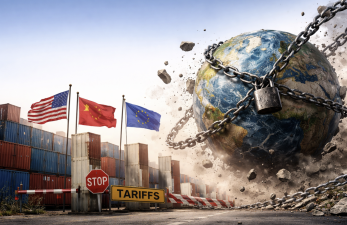
Recent global developments reveal a sharp decline in the era of globalisation. The idea that trade encourages peace and cooperation is being challenged. Instead, nations are increasingly adopting protectionist policies. Tariffs, export controls, and Buy National mandates have replaced free trade optimism. This shift marks a move from economic integration to rivalry and suspicion.
The End of Gentle Trade
The belief that trade softens international relations, known as doux commerce, dominated for decades. It suggested that mutual economic dependence would prevent conflicts. However, recent events show that interdependence now creates vulnerabilities. Countries view reliance on others as a strategic risk rather than a stabilising factor. The global economy is fragmenting into competitive blocs instead of cooperating markets.
From Efficiency to Security in Trade
Earlier globalisation focused on efficiency and cost reduction through offshoring. Companies sought the cheapest production sources assuming stable supply chains. Now, geopolitical shocks like pandemics and conflicts have exposed the fragility of these networks. Nations prefer friend-shoring and near-shoring to ensure supply security. Bilateral trade agreements are replacing multilateral deals, leading to a fragmented global marketplace.
Weaponisation of Commerce
Trade is no longer neutral but a tool of power. Critical resources and technologies, such as semiconductors and minerals, are used as leverage in political disputes. Tariffs act as weapons to weaken rivals economically. The goal is no longer mutual prosperity but to limit the gains of competitors. This zero-sum mindset increases global tensions and economic instability.
Impact on Global Peace and Cooperation
The decline of doux commerce threatens tolerance and understanding among nations. Trade once encouraged cultural exchange and peaceful relations. Now, rising protectionism erects barriers that hinder communication and trust. This economic hostility risks escalating into military conflicts. The world risks moving from a cooperative order to a fragmented and confrontational one.
Topics for Prelims:
Doux Commerce
- Concept by Montesquieu linking trade to peace.
- Suggests economic ties reduce conflict likelihood.
- Popular during the globalisation era.
- Based on mutual benefit and tolerance.
- Now challenged by rising protectionism.
Globalisation and Protectionism
- Globalisation promotes interconnected economies.
- Protectionism favours domestic industries over free trade.
- Recent shift due to geopolitical risks.
- Includes tariffs, export controls, and trade blocs.
- Leads to fragmented global markets.
Friend-shoring and Near-shoring
- Strategies to secure supply chains with allies.
- Reduce dependence on distant or rival countries.
- Contrast with offshoring focused on cost.
- Increase economic resilience against shocks.
- Growing trend in post-globalisation world.
Questions for Mains:
- Critically discuss the concept of doux commerce and its relevance in ’s global economy. [GS-II-International Relations]
- Analyse the causes and consequences of the shift from globalisation to protectionism in world trade. [GS-III-Economic Development]
- Examine the impact of weaponising commerce on international peace and security and suggest policy measures to mitigate risks. [GS-III-Internal & External Security]
- Estimate the role of friend-shoring and near-shoring in enhancing supply chain resilience and its implications for global economic relations. [GS-III-Economic Development]
Answer Hints:
1. Critically discuss the concept of doux commerce and its relevance in ’s global economy. [GS-II-International Relations]
- Doux commerce, coined by Montesquieu, links trade with peace, suggesting economic interdependence reduces conflicts.
- It promotes tolerance, mutual benefit, and cultural understanding through commerce.
- Historically underpinned the optimism of globalization and multilateral trade regimes like WTO.
- Current global trends show rising protectionism, eroding trust and mutual dependency.
- Interdependence now creates vulnerabilities, not peace, as states weaponize trade for strategic gains.
- Thus, doux commerce’s idealism is challenged; its relevance is limited in a fragmented, zero-sum global order.
2. Analyse the causes and consequences of the shift from globalisation to protectionism in world trade. [GS-III-Economic Development]
- Causes – Geopolitical tensions, pandemics, supply chain disruptions, and rising nationalism.
- Strategic vulnerabilities exposed by over-reliance on distant or rival countries.
- Shift from efficiency-driven offshoring to security-driven friend-shoring and near-shoring.
- Consequences – Fragmentation of global markets, decline of multilateralism, rise of bilateral trade pacts.
- Increased costs for consumers, reduced economic growth potential, and heightened global tensions.
- Potential risk of escalating economic conflicts into military confrontations.
3. Examine the impact of weaponising commerce on international peace and security and suggest policy measures to mitigate risks. [GS-III-Internal & External Security]
- Weaponisation includes use of tariffs, export controls, and resource denial (e.g., semiconductors, minerals) as political tools.
- Transforms trade from cooperative to confrontational, increasing mistrust and economic instability.
- Undermines global peace by eroding economic incentives for peaceful relations.
- Risks escalation of economic disputes into military conflicts.
- Policy measures – Strengthen multilateral trade rules, promote transparency, diversify supply chains, and build economic trust frameworks.
- Encourage dialogue between rival states and establish crisis management mechanisms for trade disputes.
4. Estimate the role of friend-shoring and near-shoring in enhancing supply chain resilience and its implications for global economic relations. [GS-III-Economic Development]
- Friend-shoring and near-shoring prioritize supply chain security over cost efficiency by partnering with allies or nearby countries.
- Reduces dependence on geopolitically unstable or rival nations, mitigating risks from conflicts or disruptions.
- Enhances resilience against shocks like pandemics, trade wars, or invasions.
- Leads to regionalization and fragmentation of global trade networks.
- May increase production costs and reduce global economic integration.
- Implications include shifting alliances, rise of trade blocs, and potential exclusion of non-friendly countries from supply chains.